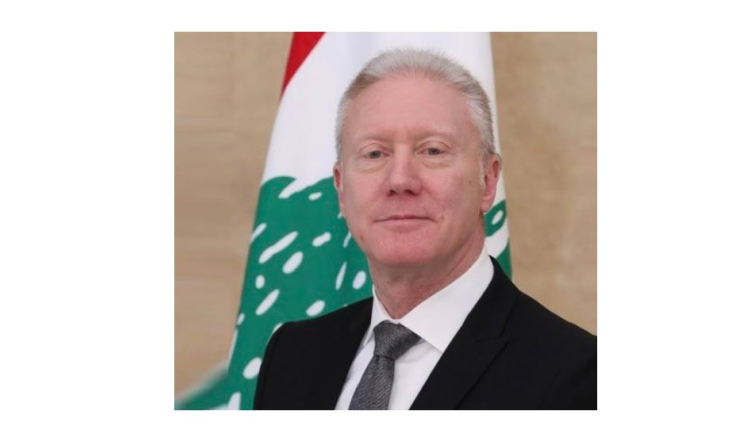
Lebanon’s Minister of Foreign Affairs and Emigrants Youssef Raji confirmed in an interview with the Emirati newspaper Al-Ittihad that “the Lebanese government’s decision to restrict arms to the state is a historic decision that has been awaited since the Taif Agreement, which was signed 35 years ago. It marks the beginning of the establishment of a state of law and sovereignty that monopolizes decisions on war and peace at home and abroad.”
He pointed out that “the Cabinet’s approval of this step would not have been achieved without the consensus of the presidency and the prime minister and the support of friendly and sisterly countries,” explaining that “the Lebanese have long awaited the return of the state to impose its full authority.”
He reiterated that “the international community, including major financial institutions such as the World Bank and the International Monetary Fund, has linked any support to Lebanon to two basic conditions: the implementation of economic reforms to combat corruption and waste, and the restriction of arms to the state. No funds or investments will flow into the country before these two conditions are met.”
Regarding the border demarcation issue, Ragi emphasized that “the borders with Israel have been demarcated since the 1948 armistice agreement, and what Lebanon needs is to consolidate these borders through indirect negotiations under the auspices of the United Nations or the United States.” He emphasized that “the immediate Israeli withdrawal from the five occupied points in the south and the release of Lebanese prisoners are two essential conditions before any further progress.”
Regarding the border demarcation issue with Syria, he considered that “this issue is a purely technical matter, requiring the formation of joint committees to address some of the overlaps,” noting that “Lebanon is waiting for the new Syrian administration to address this issue.”
He believed that “previous governments harmed Lebanese-Arab relations due to their closeness to some parties that adopted hostile positions,” emphasizing that “the current government has corrected the course,” asserting that “Arab investments in Lebanon are contingent on security and stability on the one hand, and legal and judicial guarantees that protect investors’ funds on the other.”
He emphasized that “the Lebanese crisis is not only a financial or political crisis, but also an ideological crisis, as some parties rely on transnational ideologies, and some leaders prioritize their personal interests over the national interest, which exacerbates the crises and places Lebanon facing external challenges that could have been avoided.” He emphasized that “this delicate phase in Lebanon’s history requires all political forces to prioritize the national interest over factional considerations, and to work together to rebuild the state and restore the confidence of the international community.”
Raji explained that “the greatest challenge facing the current Lebanese government is proving its ability to impose the rule of law throughout Lebanon, and achieving this will mark a turning point in the country’s future.” He noted that “Lebanon’s success in this mission will not only have an internal impact, but will also reflect on the stability of the entire region.”
He stated that “Lebanon’s return to its natural role as an independent and active state in its Arab environment will restore regional balance and give the Lebanese hope for a better future based on development and stability, not conflict.”
Al Nashra ( translated from Arabic )
