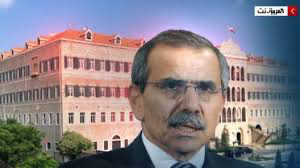
File photo: PM Designate, former ICJ president Judge Nawaf Salam
By: Ya Libnan Editorial Board
Lebanon stands at a critical juncture. With the country still reeling from unprecedented economic and political crises, the responsibility falls on the Prime Minister-designate Judge Nawaf Salam to swiftly form a government and ensure no single political group monopolizes key ministries, especially the Ministry of Finance. It has become evident that the Shiite duo—Amal and Hezbollah—is the primary obstacle to forming a cabinet, while attempting to shift blame onto Christian blocs. However, facts overwhelmingly highlight the role of the duo in obstructing progress, repeating their tactics from the prolonged presidential election stalemate.
The Legacy of Obstruction
President Michel Aoun’s term ended on October 31, 2022, yet it took until January 9, 2025, to elect his successor, President Joseph Aoun. This delay was largely due to the Shiite duo’s intransigence, setting a troubling precedent for governance. Similarly, the current deadlock over the Ministry of Finance exposes their entrenched control over this pivotal portfolio, which they have held for over a decade.
This period has been disastrous for Lebanon:
- Economic Collapse: Under Amal and Hezbollah’s watch, Lebanon defaulted on its Eurobonds, leading to the collapse of the Lebanese lira and devastating the economy. Depositors lost access to their savings, and poverty surged to over 80%.
- Beirut Port Explosion: Thousands of tons of explosive chemicals, reportedly stored by Hezbollah for use in Syrian barrel bombs, caused a catastrophic explosion in 2020, devastating the capital.
- Corruption and Mismanagement: The Central Bank, under Riad Salameh, became a symbol of corruption, with investigations and international arrest warrants ignored due to political interference by Hezbollah, Amal and their allies.
- Obstruction of Reconstruction: The Shiite duo has used their control over the Finance Ministry to block projects critical to Lebanon’s recovery, imposing unrealistic conditions and further eroding trust.
The Stakes for Lebanon’s Recovery
Lebanon’s international allies, including Saudi Arabia, Qatar, and the United States, have made it clear that aid and reconstruction funding are contingent on reform and an end to monopolization. The Ministry of Finance, in particular, has become a focal point of concern due to its misuse as a tool for political leverage rather than a means to address the country’s dire financial state.
Without cooperation, displaced Lebanese—many of them Shiites—will continue to bear the brunt of these failures. Reconstruction of tens of thousands of homes destroyed during years of conflict remains on hold, deepening despair among already impoverished communities.
A Call for Bold Leadership
The Prime Minister-designate must take a decisive stance against ministry monopolization, forming a government that reflects national interests rather than the demands of entrenched political factions. If the Shiite duo continues to obstruct progress, President Joseph Aoun has a constitutional mandate to declare a state of emergency and appoint a cabinet of impartial experts. This extraordinary measure is vital to halt Lebanon’s descent into further chaos.
President Aoun’s inaugural speech laid out a clear roadmap for Lebanon’s recovery, emphasizing governance based on merit and accountability. The PM-designate must align with this vision and resist those who seek to perpetuate the cycle of destruction and mismanagement.
The Path Forward
If Parliament fails to grant a vote of confidence to a newly formed cabinet, the President should dissolve it and call for early elections. Lebanon cannot afford further delays or concessions to those who have proven incapable of governance. “Enough is enough.”
The time has come to rebuild Lebanon—not to allow those who destroyed it to continue their destructive reign. The resilient Lebanese people deserve peace, prosperity, and good governance and are demanding change. Their leaders must rise to the occasion.
