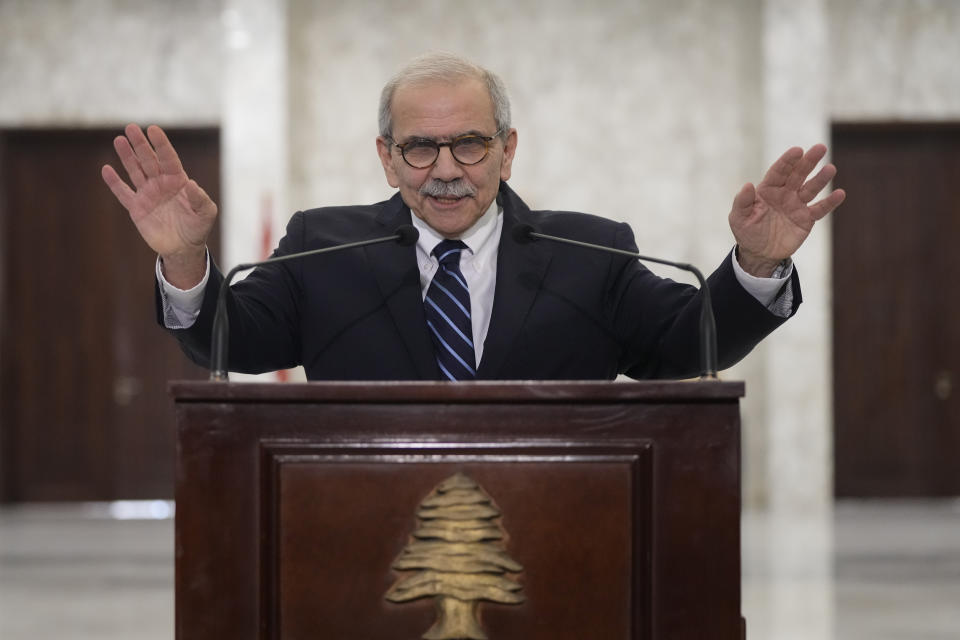
On the eve of the anniversary of the outbreak of the Civil War on April 13, 1975, how dire is our need today to learn from our past—not to conjure it up for the purposes of intimidation and fear-mongering, nor to turn it into a weapon to wield against one another.
in that war—which wrought immense destruction, left behind painful memories, and created divisions for which entire generations have paid the price—many committed errors.
Some among us erred when they burdened Lebanon with more than it could bear, prioritizing their solidarity with just causes at the expense of the imperatives of safeguarding the country’s sovereignty and security. Others among us also erred when they believed that Lebanon’s weakness could be transformed into strength.
And everyone who sought external support—under the delusion that the outside world had no objective other than to support them—erred as well, only to find themselves held captive by a game far larger than themselves. For in the Civil War, we fought against one another, and everyone paid the price.
Today, however, what is required is that we all stand together—rather than against one another—and that we fortify our internal front, preventing sedition, the threat thereof, or the fear-mongering regarding a civil war—as if we did not already know the heavy toll it exacts.” He added: “I address you today at yet another tragic juncture in our history—a moment when hearts are weighed down by the searing sense that our voices may go unheard, and that our suffering does not always find justice.
I know—and I fully grasp—the anguish of those who have lost their loved ones, their homes, their villages, and their olive groves; of those who find themselves today moving from one shelter to another. I understand your anger, and your need to have your voices heard—even at the very gates of the Grand Serail. I also understand the anxiety and fury of those who can no longer bear a destiny they did not choose for themselves—a destiny shaped by the wills of others, even if through war.
I know that the wounds of August 4th , 2020 have yet to heal—especially for my people in Beirut—and that those memories were brutally reawakened by the tragedy of April 8th, and its toll on unarmed civilians. I know that you have grown weary of being stripped of your right to self-determination.
I feel the pain of the mother who lost her fighter son on the front lines, just as I feel the pain of the mother who lost a child who never chose this war—a child who asked for nothing but to live. I know that you are all suffering… suffering beyond endurance, and have been for far too long. And I also realize that what has long been a source of richness for this country—its diversity—can, at times, transform into a force of division.
You carry within your collective conscience a shared memory, alongside a multitude of distinct memories and experiences. It is my responsibility to reinforce the bonds that unite these memories, to soothe their tensions, and to bridge the divides between them to the greatest extent possible.”
He continued: “My people in the South know, better than anyone else, the true cost of wars, divisions, and misguided gambles.
For decades, they have paid the price of occupation, aggression, and displacement; they have also paid the price of a multiplicity of decision-making centers, as well as the absence—or weak presence—of the State.
Consequently, it is our national duty today to affirm that the South will not, once again, be left to face fear, destruction, and existential anxiety all alone.
Its protection—much like the protection of all of Lebanon—can only be achieved through a single, strong, and just State.”
He emphasized: “We will continue to work toward halting this war, securing an Israeli withdrawal from all our territories, and recovering all our prisoners.
We will also strive to rebuild our destroyed villages and towns, ensure the safe return of our displaced people to their homes, and empower them to live there with dignity and security.
To this end, we remain steadfast in our efforts to bring an end to the war—foremost among these being the initiative put forth by His Excellency the President to negotiate a ceasefire, and to enable legitimate State institutions to fulfill their full role in protecting both Lebanon and the Lebanese people.”
He called upon everyone “to return to the covenant we mutually agreed upon—not merely to halt the civil war, but to build the envisioned state: a just and strong state, a unified state that embraces all its citizens.
The reference here is, of course, to the Taif Agreement.
Let us implement its provisions in full; let us rectify whatever has been implemented in contravention of its text or spirit; and let us work to address the gaps that practical application has exposed, while developing the agreement whenever the need arises.
Given that the Taif Agreement explicitly mandates the extension of state authority over the entirety of its territory—exercising its own inherent capabilities—a mandate we have failed to fulfill since the agreement’s ratification, the actualization of this objective would ensure security and safety for all citizens.
It would allow for the rule of law to be established across every corner of the country, applying equally to all—ensuring that no one stands above the law or outside its jurisdiction.”
Salam concluded: “The dignity of the nation is the dignity of you all, without distinction. If preserving that dignity today demands humility and a sense of responsibility, then I stand fully committed to that cause. I call upon you all to hold fast to the bonds that unite us, thereby safeguarding our homeland and the future of our children. Let us confront the perils looming over us—together—with reason, unity, and a profound sense of national responsibility.
Our unity today is not a mere sentimental slogan; it is a national imperative. We all belong to the nation, and the nation belongs to us all.“
