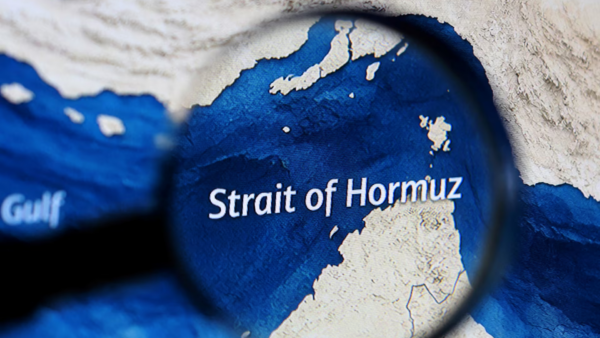
President Donald Trump said that “effective immediately” the U.S. Navy will prevent ships from passing through the Strait of Hormuz, accusing Iran of extorting them.
Vice President JD Vance said Sunday that a marathon session of negotiations between the United States and Iran had failed to immediately produce an agreement to end the war.
Here’s the latest.
The top Iranian negotiator on Sunday appeared to leave the door open for future diplomacy after marathon peace negotiations between Iran and the United States failed to immediately produce an agreement to end the war.
The fate of the fragile truce now remains uncertain after the 21 hours of talks in Pakistan, led by the Iranian negotiator, Mohammad Bagher Ghalibaf, and Vice President JD Vance. Mr. Vance said in the early hours of Sunday that Iran had “chosen not to accept our terms,” before departing the capital, Islamabad.
Israel launches new attacks in Lebanon, days ahead of rare talks between the two sides.
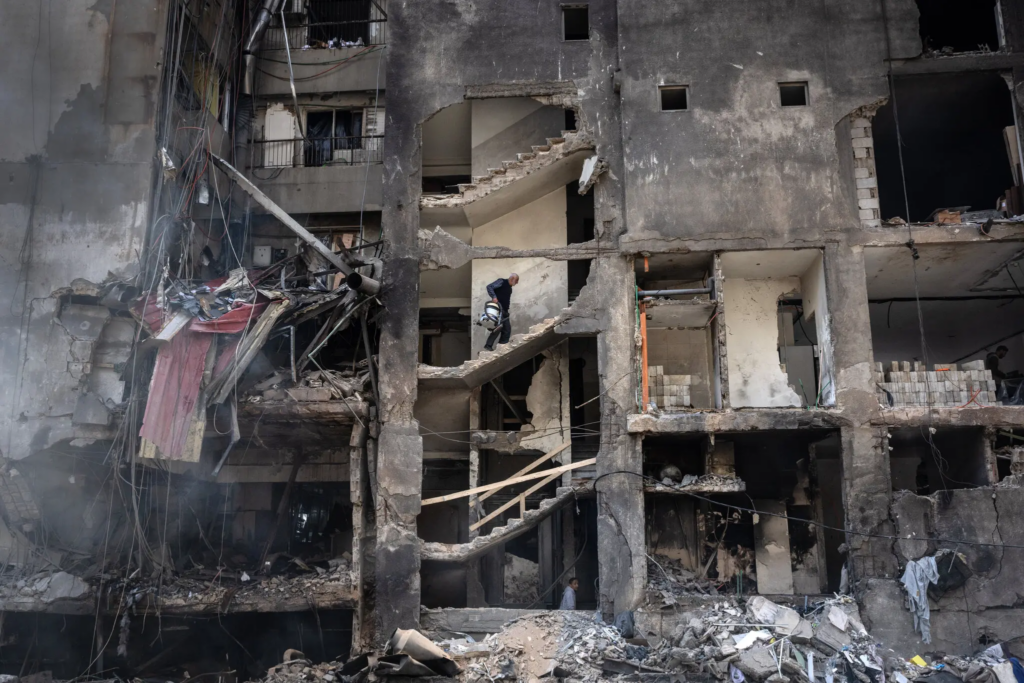
A building in the Lebanese capital, Beirut destroyed after Israeli strikes on the city. Credit…David Guttenfelder/The New York Times
Israel launched new attacks on Lebanon on Sunday after the United States and Iran failed to reach a quick peace deal over the weekend.
Last week, President Trump asked Israel to scale back its attacks on Lebanon. The fighting in recent days, which Israel says is targeting the Iran-backed militant group Hezbollah, appears to be focused on southern Lebanon; Israel has not bombed the capital, Beirut, since an onslaught on Wednesday.
Israeli war with Iran is ‘not yet over.: Netanyahu
PM Netanyahu of Israel sought to mollify criticism at home that the war with Iran failed to achieve its goals in a televised address on Saturday, even as he pointedly avoided discussing the weekend negotiations between the U.S. and Iran.
Iran leaves the door
Mohammad Bagher Ghalibaf, the speaker of Iran’s Parliament and its lead negotiator in the talks with the United States, appeared to leave the door open for further diplomacy. In a statement posted on social media on Sunday, he said that the United States had been “unable to gain the trust of the Iranian delegation in this round of talks,” but that “now it is time for it to decide whether it can earn our trust or not.”
Javad Zarif, a former Iranian foreign minister, said on social media that it was “not too late” for the United States to learn that it “can’t dictate terms to Iran.” Zarif was in office when the United States reached its nuclear deal with Iran in 2015. President Trump dispensed with that agreement in 2018.
Control of the Strait of Hormuz and Iran’s uranium stockpiles were sticking points.
When talks between the United States and Iran ended just before dawn on Sunday morning without a permanent cease-fire, the Americans said they had made their final best offer and that Iran had not accepted.
“We’ve made very clear what our red lines are, what things we’re willing to accommodate them on, and what things we’re not willing to accommodate them on,” Vice President JD Vance said after 21 hours of meetings with top Iranian officials at the Serena Hotel in Islamabad.
Vice President JD Vance’s failure to win the concessions the United States sought from Iran in a single, marathon negotiating session over its nuclear program was no surprise.
But what now?
Pakistan’s foreign minister, Ishaq Dar, said in a state broadcast on Sunday morning that it was “imperative” that the parties uphold their commitment to a ceasefire after talks between the two sides to end the war in the Middle East ended without an agreement.
THE NEW YORK TIMES
