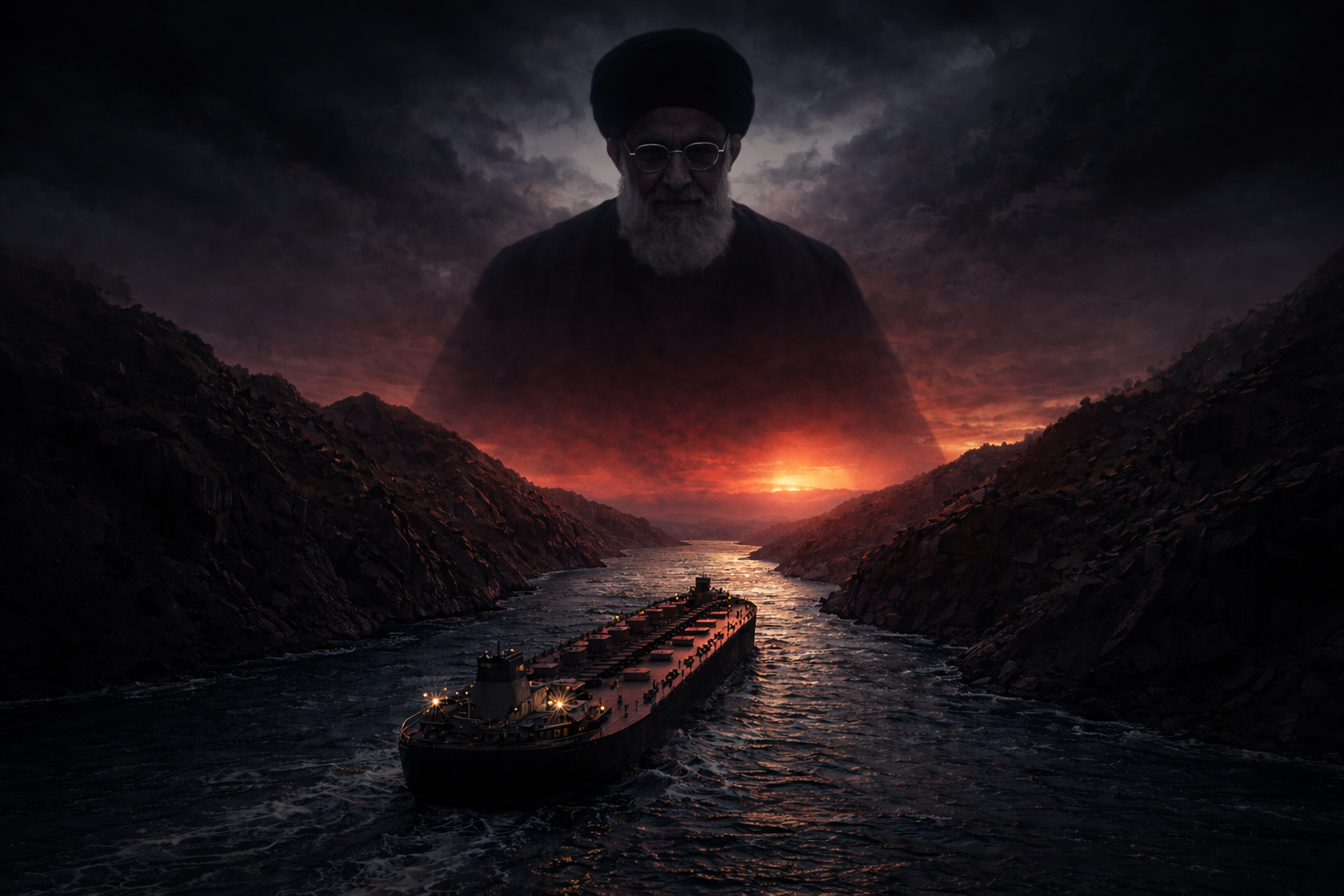
Image- In 1987, America escorted ships through Hormuz. In 2026, ships are waiting for Iran’s permission
From Reagan’s resolve to today’s drift—how a war meant to tame Tehran left it controlling Hormuz and dictating Gulf security- The Arab Gulf has rarely looked this vulnerable.
By : Ya Libnan Editorial Board, Op.Ed.
What was presented as a war to weaken Iran has done the opposite. Instead of isolating Tehran, it has strengthened it—strategically, economically, and politically. Today, Iran sits in the driver’s seat, holding the Strait of Hormuz as leverage over the world’s energy lifeline and over the very Gulf states the United States once pledged to protect.
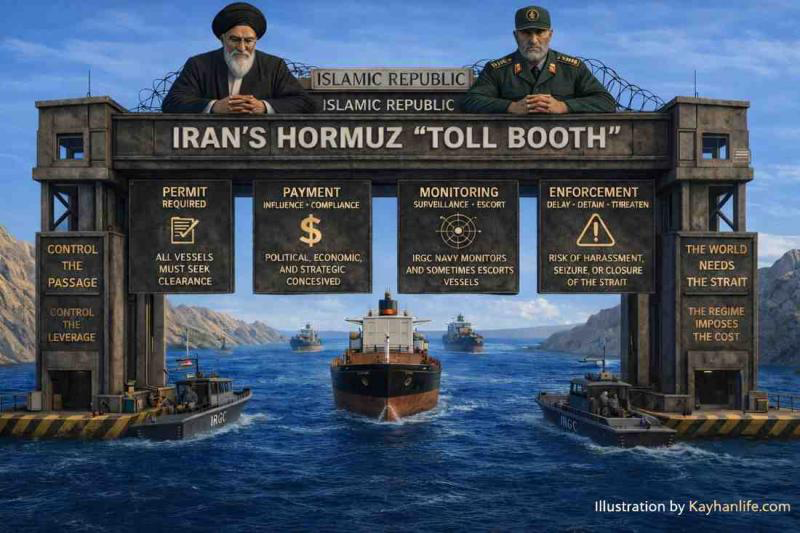
Iran’s Hormuz ‘Toll Booth’ that will lead to higher energy prices :
This is not deterrence. This is reversal.
We have seen this movie before. In 2003, President George W. Bush invaded Iraq to eliminate a threat and reshape the Middle East. The result was the opposite: Iraq became the gateway for Iranian influence in the Arab world.
Two decades later, history may be repeating itself. President Donald Trump entered this confrontation promising strength and decisive outcomes. Instead, this war risks becoming the moment Iran consolidated its dominance over the Gulf.
From Reagan’s Resolve to Today’s Drift: What Went Wrong?
The main concern is: How could the United States guarantee freedom of navigation four decades ago—but struggle to do so today, despite being far more powerful?
In 1987, under President Ronald Reagan, the U.S. faced a direct threat to Gulf shipping during the Iran-Iraq War. Tankers were under attack. The Gulf was at risk.
Reagan did not hesitate.
Through Operation Earnest Will, the U.S. reflagged Kuwaiti tankers and escorted them through dangerous waters. The message was clear: freedom of navigation was non-negotiable.
When Iran escalated, Reagan responded decisively with Operation Praying Mantis—crippling Iran’s naval forces in a single day.
The result was immediate. Iran backed down. Shipping resumed. The Strait remained open.
No NATO coalition. No ambiguity. No hesitation.
More Power, Less Strategy
Today, the United States is far stronger than it was in Reagan’s time. Its military capabilities are unmatched.
Yet the outcome is the opposite.
Instead of securing maritime routes, Washington now finds itself negotiating while Iran dictates conditions in the Strait of Hormuz—controlling flows, intimidating shipping, and even floating the idea of tolls.
President Donald Trump has pointed fingers at NATO. But that argument does not hold.
Reagan did not need NATO to act decisively. And more importantly, Trump did not rely on NATO when launching this war. You cannot sideline allies when initiating conflict and then blame them for its outcome.
What Really Went Wrong
The difference is not power. It is clarity.
Reagan had a clear objective:
Protect shipping. Enforce it. Escalate if challenged.
Today, the objective is blurred:
Is it deterrence? Negotiation? Regime pressure? Containment?
Without a clear goal, even overwhelming power becomes ineffective.
Iran understands this well. It does not need to win wars outright. It needs only to outlast, outmaneuver, and outleverage.
And once again, it appears to have done exactly that.
A Strategic Reversal
This war was supposed to tame Iran and restore deterrence.
Instead, it left Iran stronger—holding leverage over global energy, emboldened in regional politics, and negotiating from a position of strength.
The Gulf states are more anxious than ever.
Lebanon is paying the price of a war it did not choose.
And the global economy is now exposed to a chokepoint that should have been secured—not surrendered.
The Verdict History May Deliver
This is why both Donald Trump and Benjamin Netanyahu risk being remembered not as the leaders who contained Iran—but as the ones who inadvertently empowered it.
Their ambitions were bold.
Their outcome may prove historic—for all the wrong reasons.
Because in the end, the measure of any war is simple:
Did it leave your adversary weaker—or stronger?
In this case, the answer is becoming impossible to ignore.
Stronger.
And the Gulf is now paying the price.
