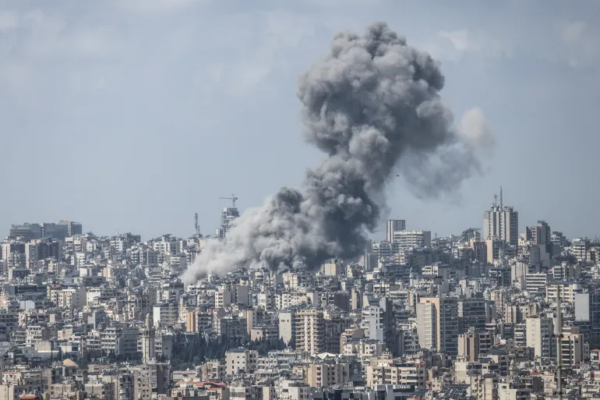
Smoke rises from the sites of Israeli air strikes on Beirut and its southern suburbs [AFP]. Hundreds were killed and over a thousand were wounded within 10 minutes of Israel strikes a day after a ceasefire was reached between US and Iran. This was the largest ever attack by Israel in one day
You wonder tonight just how sustainable this wider ceasefire is.
By Nick Beake, Analysis
Israel trumpeted hitting 100 targets in the space of 10 minuets in Lebanon on Wednesday. The Iranians are threatening to hit back unless the attacks stop.
President Trump has indicated the Israelis are not breaking the terms of his Iran deal – referring to Lebanon as a “separate skirmish”.
Just a reminder: 1,500 people have been killed in Lebanon in the last six weeks, including 130 children, and more than a million people have been displaced.
Israeli Prime Minister Netanyahu had – he thought – achieved his political ambition of a lifetime in persuading a US president to embark on a joint venture to hit Iran and topple the regime.
Tonight he had to deny suggestions he found out only at the last minute that President Trump was stepping back and halting strikes on Tehran.
He also vowed Israel would be ready to resume the war with Iran, if needed.
Opposition politicians say he has failed in his war aims, was not invited to the negotiating table, and has only created a more vengeful Iran – more determined than ever to build a nuclear weapon.
But in the short term, these continued Israeli attacks on Hezbollah in Lebanon – and the accompanying death and destruction – are putting a considerable strain on this fragile truce.
BBC
