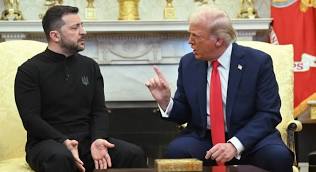
PHOTO- President Trump and Ukrainian President Zelensky during their first meeting in the Oval Office February 28, 2025.
After years of pressuring Europe and sidelining allies, Washington should not be surprised by Europe’s hesitation to join the war against Iran.
By : Vlad Green, Opinion
President Donald Trump should not be angry at Europe’s lack of enthusiasm for helping in the war against Iran. The hesitation of European governments is neither surprising nor unreasonable. It is the natural consequence of how they have been treated.
For years—beginning in his first presidency and continuing after returning to office—Trump repeatedly criticized European allies, questioned the value of NATO, and treated transatlantic relations more like business transactions than strategic partnerships. Disagreements among allies are normal, but the tone and approach often resembled confrontation rather than cooperation. When allies are publicly pressured, criticized, and occasionally humiliated, it becomes difficult to suddenly expect enthusiastic support when a new conflict erupts.
This matters because alliances are central to America’s global influence. Much of the United States’ strength does not come only from its military power but from the network of allies who stand with it during times of crisis. If those alliances weaken, Washington’s ability to manage conflicts—from Europe to the Middle East and Asia—becomes far more difficult.
Another issue that cannot be ignored is the lack of consultation before the war began. Major military campaigns involving a region as sensitive as the Middle East normally require close coordination with allies. European governments and other partners should have been briefed about Washington’s intentions, the objectives of the campaign, and the expected consequences. That is, after all, one of the main purposes of alliances. When allies are neither consulted nor prepared in advance, it becomes far harder to expect their immediate support once the conflict begins.
Ukraine offers a striking example of this contradiction. For the past year, Trump has pushed Ukrainian President Volodymyr Zelenskyy to consider territorial concessions to Russia’s Vladimir Putin as a way to end the war in Ukraine. Yet Russia has reportedly been supporting Iran militarily and strategically—directly or indirectly strengthening a country now confronting the United States and its partners.
The contrast could not be clearer. While Putin has been helping Iran, Zelenskyy has been helping America’s friends. Ukraine has reportedly shared battlefield knowledge and strategic insights with Gulf countries as they prepare for possible threats from Iran and its proxies.
Consistency matters in foreign policy. When Washington pressures the leader of a country resisting Russian aggression while appearing more accommodating toward Moscow, it creates confusion about America’s strategic priorities and weakens trust among allies.
Alliances are not vending machines that produce support on demand. They are relationships built slowly through trust, respect, and consultation. Leaders cannot spend years criticizing partners, undermining their security concerns, and questioning their value—and then expect them to instantly rally behind a new war effort.
If the United States wants Europe standing shoulder to shoulder with it in moments of crisis, it must invest in those relationships long before the crisis begins. Strong alliances are built through partnership, not pressure; through respect, not humiliation.
The lesson is simple but essential: you cannot bully allies and then expect their help as if nothing happened.
