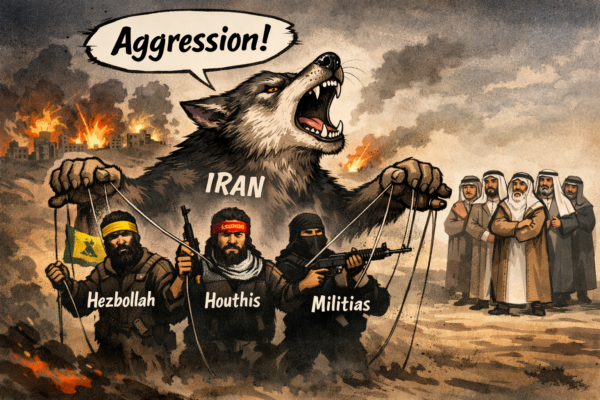
After decades of building proxy militias across the Middle East, Tehran now wonders why most Arab and Islamic nations refuse to stand by its side.
By : Ali Hussein, Lebanese Political Analyst , Op.Ed
Iranian officials continue to portray their country as the victim of a vast conspiracy. Ali Larijani, Secretary of Iran’s Supreme National Security Council, recently claimed that Iran was subjected to a “deceitful American-Zionist aggression” during negotiations whose goal was to dismantle Iran. He also complained that most Islamic states failed to stand by Tehran, offering only limited political support.
But Iran has few others to blame for its growing isolation.
For more than four decades, the Iranian regime has pursued a strategy of building what it calls a “resistance network” across the Middle East. Through this network, Tehran has armed and financed powerful proxy forces such as Hezbollah in Lebanon, Shiite militias in Iraq, and the Houthis in Yemen. While Iran presents these groups as defenders of the Muslim world, many Arab governments view them as instruments of Iranian expansionism that undermine state sovereignty and destabilize entire countries.
This policy has created deep mistrust among Iran’s neighbors. Nations that might otherwise sympathize with Iran’s grievances have instead become wary of Tehran’s ambitions and interference in their internal affairs. When Larijani asks why Islamic governments are not standing firmly beside Iran, the answer lies largely in Iran’s own actions.
By targeting American bases and Western interests located in Arab countries, Iran has placed those governments in an impossible position—forcing them to choose between their national security and Iran’s regional agenda.
Unity in the Muslim world cannot be built through militias, proxy wars, and ideological confrontation. It requires respect for national sovereignty, stability, and cooperation among states.
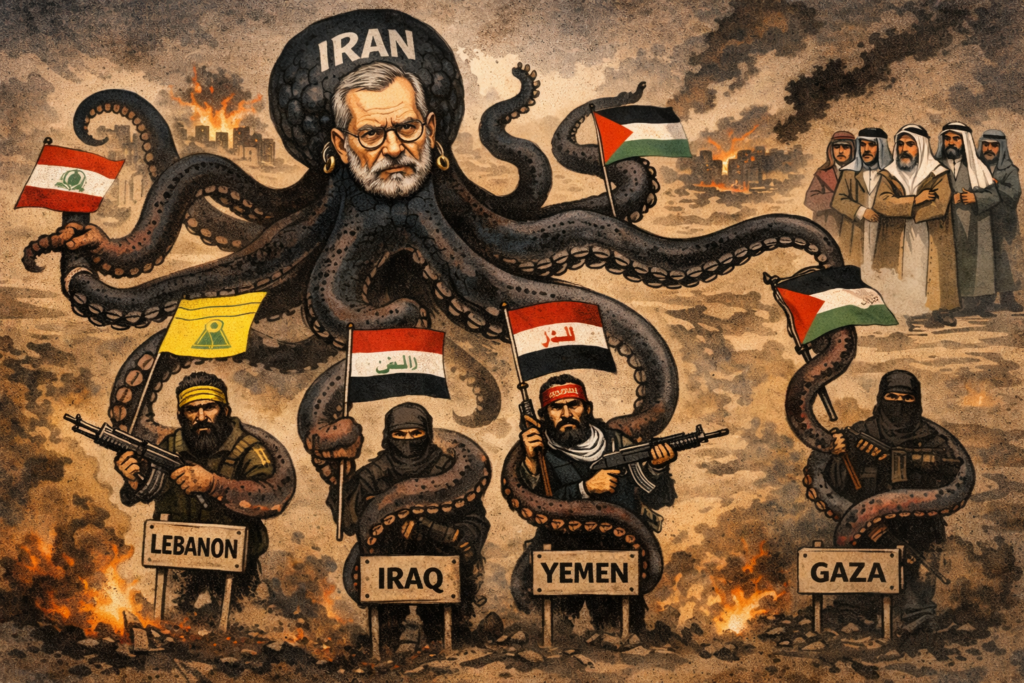
Until Iran abandons its reliance on armed proxies and stops interfering in the affairs of its neighbors, its calls for Islamic solidarity will likely continue to fall on deaf ears.
And as long as Tehran continues to blame others for the consequences of its own policies, the region will see Iran’s complaints not as a cry for justice—but simply as a case of crying wolf.
