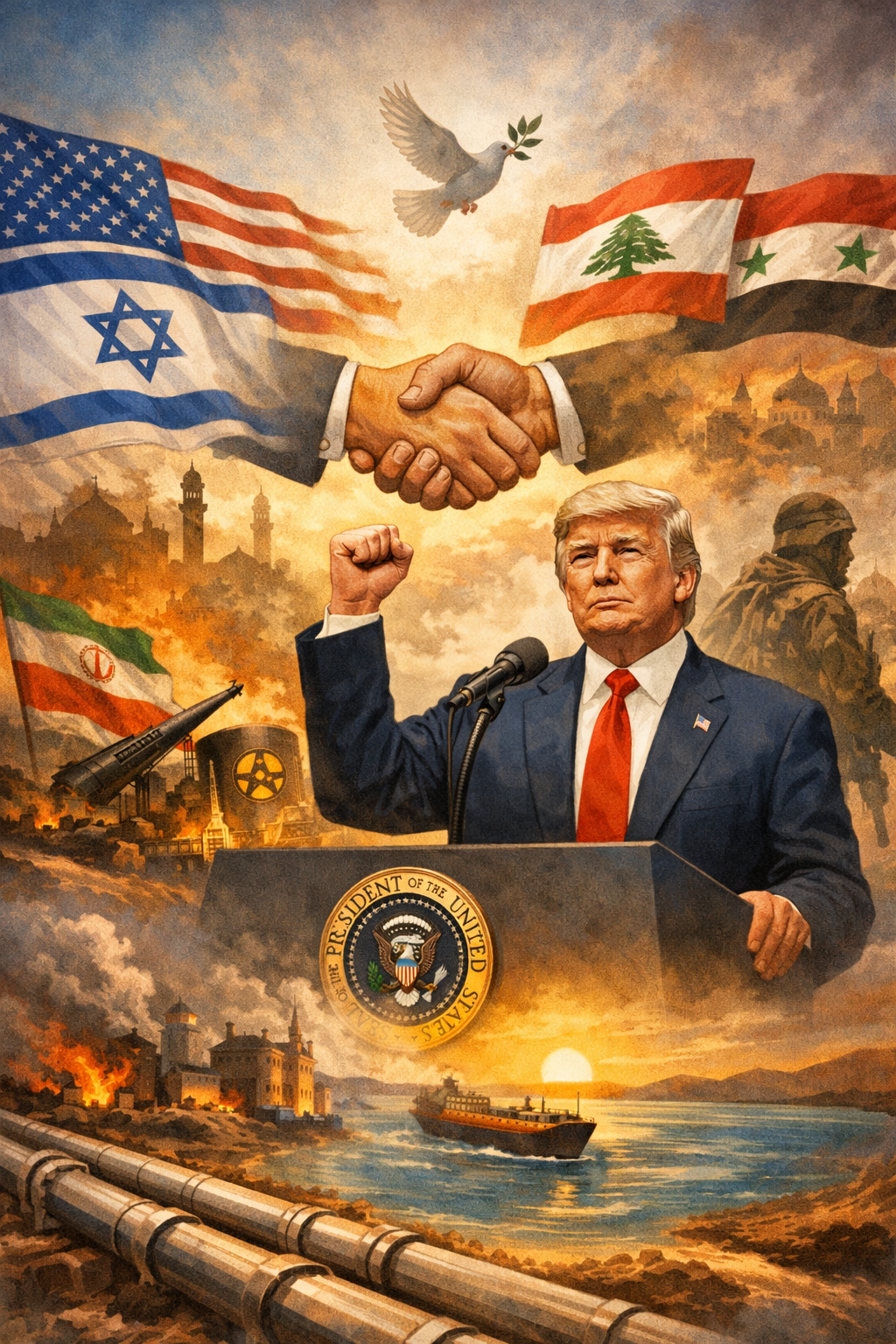
Iran has been badly weakened, its ambitions exposed, and its proxies further discredited. Prolonging the conflict now risks turning a limited campaign into another costly Middle East quagmire.
President Trump should declare victory now and bring this war to an end.
By: Ya Libnan Editorial Board
From the beginning, the administration described the conflict as a limited campaign aimed at weakening Iran’s military capabilities and curbing its regional ambitions. By most strategic measures, those objectives have largely been achieved. Continuing the war beyond this point risks turning a contained operation into another prolonged Middle East conflict—something the United States, the region, and the global economy cannot afford.
Iran has suffered a significant strategic setback. Its military infrastructure has been damaged, its leadership shaken, and its long-standing regional strategy exposed. For years Tehran attempted to expand its influence through proxy forces and intimidation of neighboring states. But the war has produced the opposite effect. Instead of strengthening Iran’s position, it has pushed many of its neighbors to distance themselves further from Tehran and strengthen their own security partnerships.
Perhaps Iran’s biggest miscalculation was threatening to close the Strait of Hormuz. That move disrupted global energy markets and drove oil prices sharply higher. Yet it also reinforced the wisdom of Gulf countries such as Saudi Arabia and the United Arab Emirates that invested heavily in pipelines and export routes designed to bypass the strait. What Tehran hoped would give it leverage instead reminded the world why these alternatives were necessary in the first place.
Inside Iran, the deeper problem remains political stagnation. Replacing one Supreme Leader with another identical figure will not bring the renewal Iran desperately needs. The country’s antiquated clerical system has kept it isolated from much of the modern world for decades. Simply replacing one version of Ayatollah Khamenei with another photocopy of the same ideology would guarantee that Iran remains trapped in the past rather than moving toward the 21st century.
Meanwhile, Lebanon has once again paid a terrible price for a war it did not choose. Iran’s proxy Hezbollah dragged the country into yet another devastating conflict that destroyed homes, displaced families, and further weakened Lebanon’s fragile economy. This time, however, something important is changing inside Lebanon itself.
Many Lebanese—especially within the Shiite community—are increasingly questioning Hezbollah’s role. For the first time in years, more people are openly criticizing Hezbollah for dragging Lebanon into Iran’s regional confrontations. In many circles, the anger directed at Hezbollah’s decisions now exceeds the anger directed at Israel.
Ironically, this painful moment may open the door to diplomacy. Cyprus has offered to host and mediate direct peace talks between Israel and Lebanon. A peace agreement between the two countries would fundamentally change the political landscape. It would eliminate Hezbollah’s long-standing justification as a so-called “resistance movement” and strengthen the authority of the Lebanese state.
There are also signs that Syria and Israel may soon begin exploring their own path toward dialogue. If these diplomatic efforts move forward, the region could witness the emergence of a new Middle East—one shaped more by diplomacy, economic cooperation, and stability than by proxy wars and ideological confrontation.
Such developments would further isolate Iran’s hardline leadership and could eventually encourage change from within.
Some policymakers now argue that the war should continue in order to eliminate Iran’s remaining stockpile of highly enriched uranium. Reports suggest that the United States and Israel have even discussed the possibility of sending special forces into Iran to physically secure or destroy these materials.
But this should not become the next justification for prolonging the war.
A ground operation aimed at seizing nuclear material from fortified underground facilities would be extremely complex and dangerous. It could easily escalate the conflict and pull the United States into a deeper and far more unpredictable military commitment. If the current campaign has already weakened Iran’s military and exposed its regional ambitions, there is little reason to open a new and risky phase of the war.
The uranium issue can be addressed later through international monitoring, diplomacy, or targeted operations if necessary. It should not become the reason to transform a limited campaign into an open-ended conflict.
The lessons of Iraq and Afghanistan remain fresh. Both wars began with limited objectives and early declarations of success, yet both expanded into long and costly conflicts that drained resources and destabilized the region for years.
President Trump now faces a defining moment. He can prolong the conflict and risk repeating the mistakes of the past, or he can lock in the strategic gains already achieved.
Declaring victory now would demonstrate strength, not weakness. It would show that the United States knows when its objectives have been met and when diplomacy should take the lead.
Ending the war now would spare the region further destruction, protect the global economy from another energy shock, and allow the Middle East to begin moving toward a more stable future.
The opportunity is there.
The time to declare victory—and end the war—is now.
