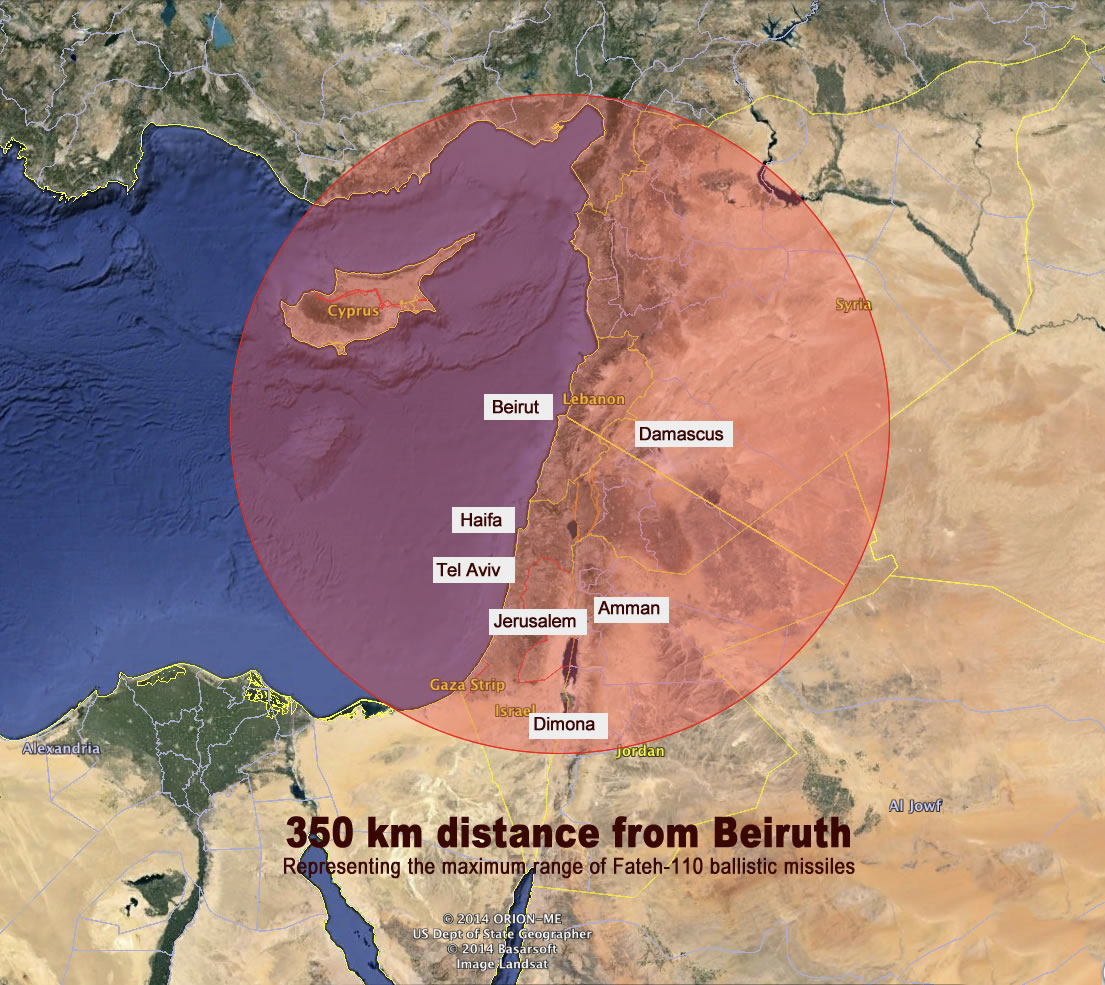
Iran reportedly built a factory for Hezbollah in Lebanon to manufacture this Iranian Fateh 110 missile and several others
If Washington wants the Lebanese Army to confront Iran’s most powerful militia, it must provide real support — or back a peace deal that removes Hezbollah’s excuse to keep its weapons.
By : Ya Libnan Editorial Board, Op.Ed
Washington wants the Lebanese Army to disarm Hezbollah — but expects it to do so with almost no resources.
The Lebanese government recently proposed direct negotiations with Israel, through the Trump administration, aimed at ending the war and eventually reaching a peace agreement, according to several sources familiar with the discussions. Instead of welcoming the opportunity, however, both the United States and Israel responded with skepticism.
At the same time, U.S. envoy Tom Barrack has been pushing the Lebanese government to ensure that the Lebanese Army disarms Hezbollah. The army has already taken limited steps. Under the November 2024 ceasefire arrangement, Lebanese forces deployed south of the Litani River and partially removed Hezbollah fighters from the area in line with the agreement.
But expecting the Lebanese Army to fully disarm Hezbollah by force ignores a basic reality.
The Lebanese Army is simply too weak to confront a militia that has operated in Lebanon for nearly half a century and is heavily armed with some of the most sophisticated weapons Iran can supply.
While Israel receives tens of billions of dollars in advanced U.S. military assistance, Lebanon — a country that depends heavily on Washington’s support — receives little more than symbolic aid.
In simple terms, peanuts cannot defeat a powerful militia.
If the international community genuinely expects the Lebanese Army to confront Hezbollah, it must provide the tools necessary to do so. No army can defeat a heavily armed force without adequate equipment, intelligence capabilities and sustained financial support.
The disarmament of Hezbollah is not a new demand. It is already required under United Nations Security Council Resolution 1559, which calls for the disbanding and disarmament of all militias in Lebanon, and reinforced by United Nations Security Council Resolution 1701, which ended the 2006 war between Israel and Hezbollah and called for the Lebanese state to exercise full authority over its territory. Nearly two decades later, these resolutions remain only partially implemented, largely because Lebanon has never been given the political backing or military capacity needed to enforce them.
There is also a more practical path forward.
A peace agreement between Lebanon and Israel could fundamentally change the strategic landscape. Once a peace deal is reached, Lebanon would have the political and legal space to sign security arrangements that could guarantee stability along the border.
Such an agreement would also remove Hezbollah’s main justification for maintaining its weapons.
Notably, U.S. envoy Tom Barrack himself has repeatedly advocated normalization between Lebanon and Israel — as well as between Syria and Israel — since assuming responsibility for the Lebanese and Syrian files.
What is often overlooked abroad is that the desire to restore the authority of the Lebanese state is no longer limited to one political camp. Today, a growing number of Lebanese — including many within the Shiite community that has suffered the most from repeated wars — are questioning whether Hezbollah’s weapons still serve Lebanon’s interests. Entire towns in the south have paid a devastating price. Many Lebanese Shiites increasingly want stability, reconstruction and a normal life under the protection of the Lebanese state rather than endless confrontation.
Today, the overwhelming majority of Lebanese want Hezbollah disarmed and the Lebanese state to reclaim full authority over its territory.
But Lebanon cannot achieve this transition alone.
If Washington truly wants Hezbollah disarmed and the Levant stabilized, it must stop offering Lebanon peanuts and start offering real support — or back a diplomatic settlement that removes the very justification Hezbollah uses to keep its weapons.
