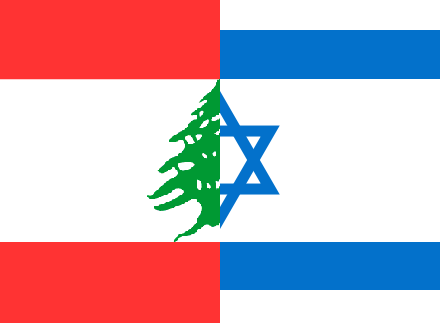
The Lebanese government proposed direct negotiations with Israel — through the Trump administration — aimed at ending the war and reaching a peace agreement, according to five sources with knowledge of the matter.
Both the U.S. and Israeli responses were cool and deeply skeptical, the sources said.
Why it matters: Lebanon’s government is extremely alarmed that the renewed war, triggered by Hezbollah’s decision to launch rockets at Israel, will devastate the country.
- So far, the Lebanese army has refused to take meaningful action against the Iran-backed militant group.
- And with Washington uninterested in mediating and Israel determined to use the moment to dismantle Hezbollah, a full-scale escalation appears increasingly likely.
Hezbollah entered the fighting on the second day of the U.S.-Israeli war against Iran, firing rockets and drones toward Israel and intensifying its attacks in the days that followed.
- Israel responded with massive airstrikes — including in Beirut — and ground incursions into southern Lebanon, expanding its military footprint in the country.
- Hezbollah has since engaged Israeli forces in guerrilla warfare on the ground.
- More than 600,000 Lebanese civilians have fled the south. Beirut’s southern suburbs, considered a Hezbollah stronghold, have been nearly emptied after the Israel Defense Forces warned of impending strikes.
Last week, the Lebanese government approached Tom Barrack — the U.S. ambassador to Turkey — and asked him to mediate with Israel, according to a U.S. official, an Israeli official, and three sources with direct knowledge of the matter.
- The Israeli official said the Lebanese government also claimed some Hezbollah members were open to a deal.
- In an unprecedented step, Lebanon proposed holding immediate direct talks with Israel at the ministerial level in Cyprus.
- Barrack’s response was blunt: “Stop with the bullsh*t” on disarming Hezbollah, or there’s nothing to discuss. “If it’s not real action about Hezbollah’s weapons, there’s no point,” a source said.
Sources say the Israeli government rejected the outreach outright, signaling it was too late. Its focus is on eliminating Hezbollah.
Barrack is also the U.S. envoy to Syria and Iraq. While he worked the Lebanon file last year, he hasn’t been engaged on the issue for several months.
- The U.S. diplomat most recently handling Lebanon was Morgan Ortagus, who left the government in January.
- The current U.S. ambassador to Beirut, Michel Issa, is the senior American official formally responsible for Lebanon — but has limited access to decision-makers in Washington.
- The result is a Lebanon portfolio with no clear owner at a moment of acute crisis.
Lebanese President Joseph Aoun, Prime Minister Nawaf Salam, and Parliament Speaker Nabih Berri were furious when Hezbollah joined the war — having received assurances from the group’s political leadership for weeks that it would stay out of any conflict between Israel and Iran, a source said.
- The episode made clear that Hezbollah’s political arm doesn’t have real control over its military wing — and that Iran’s Islamic Revolutionary Guard Corps holds decisive influence over the group’s actions.
- AXIOS
