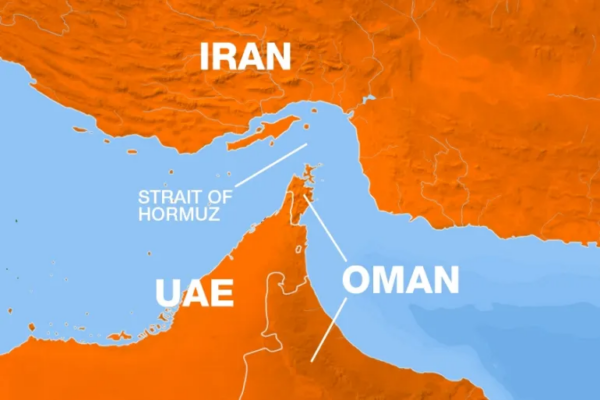
Photo- Strait of Hormuz
Oil prices have jumped 36% in a week as tankers avoid the Gulf. The U.S. Navy protected this vital route before—and can do so again.
By : Ya Libnan Editorial Board, Op.Ed
The global economy is once again being threatened by instability in the Strait of Hormuz. Oil prices have surged from about $67 per barrel before the war with Iran to more than $91 last week—a staggering 36 percent increase in just days. The spike is already pushing gasoline prices higher and threatening consumers and economies worldwide.
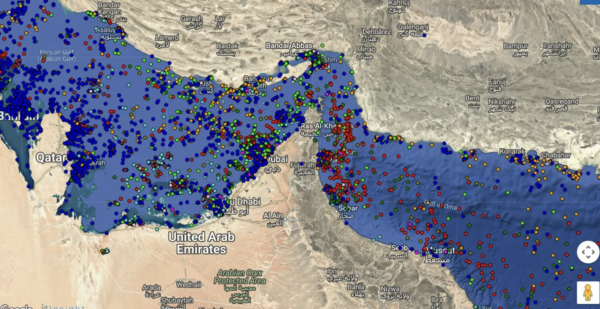
File- Shipping traffic in Strait of Hormuz on 28 Feb. Crude Oil prices started falling after Trump made the announcement
The reason is simple: oil tankers are avoiding the Strait of Hormuz.
This narrow waterway bordering Iran handles roughly one-quarter of the world’s seaborne oil trade, along with massive shipments of liquefied natural gas from the Gulf. When tankers hesitate to pass through it, global energy markets react immediately. Traders panic, prices surge, and consumers everywhere—from American drivers to European households and Asian manufacturers—end up paying the price.
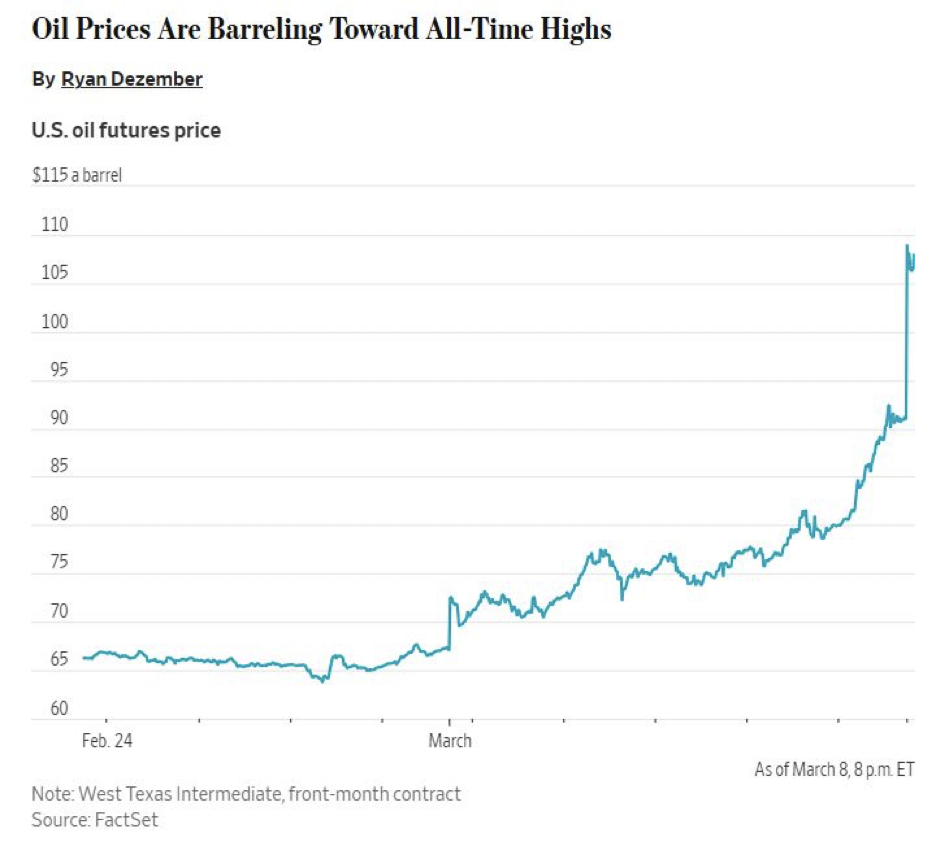
Every $1 increase in a barrel of crude oil adds approximately
2.5 cents (or $0.025) to the price of a gallon of gasoline at the pump. oIl futures went up Monday morning over $25 a barrel in early trading to about $118 a barrel .
President Trump announced on March 4 that the United States would provide political risk insurance and guarantees for energy tankers and that the U.S. Navy would escort ships through the Strait of Hormuz if necessary. The announcement helped calm markets briefly.
But markets do not move on announcements. They move on action.
History already provides the roadmap.
During the Iran-Iraq War in the late 1980s, Iran began attacking oil tankers in the Persian Gulf in what became known as the “Tanker War.” Global energy markets faced a similar threat. The United States did not hesitate. Washington launched Operation Earnest Will, reflagging Kuwaiti oil tankers under the American flag and escorting them through the Gulf with U.S. Navy warships.
When Iran continued threatening shipping, the United States responded decisively in Operation Praying Mantis, crippling Iranian naval assets responsible for attacks on maritime traffic.
The result was immediate. Tanker traffic resumed, global energy markets stabilized, and Iran’s attempt to weaponize the Strait of Hormuz failed.
The lesson is clear: freedom of navigation must be enforced quickly and decisively.
Today the stakes may be even higher. The world economy is already fragile, struggling with inflation, supply chain disruptions and geopolitical tensions. A prolonged disruption in Gulf energy supplies could trigger a global economic shock.
It would also produce an unintended geopolitical consequence. Every increase in oil prices strengthens major energy exporters—including Russia—helping finance Moscow’s war machine while weakening Western economies. In other words, hesitation in the Strait of Hormuz risks rewarding America’s adversaries while punishing consumers across the world.
Securing the Strait of Hormuz would also reassure America’s partners in the Gulf who depend on this vital waterway to export their energy to global markets. Countries such as Saudi Arabia, the United Arab Emirates, Qatar and Kuwait rely on stability in the Gulf to sustain their economies and maintain confidence in the world’s energy supply.
Restoring safe navigation would calm energy markets, lower prices for consumers and strengthen confidence among America’s allies. It would also deliver something American voters care deeply about: lower gasoline prices and economic stability at home.
The United States Navy remains the most powerful maritime force on earth. Guaranteeing safe passage for commercial shipping through the Strait of Hormuz is well within its capabilities—and within its long-standing mission of protecting global trade routes.
Markets are watching. Consumers are paying. Allies are waiting.
The question now is simple:
If the United States secured the Strait of Hormuz during the tanker war of the 1980s, why is Washington hesitating today?
Freedom of navigation in one of the world’s most critical waterways cannot be left to uncertainty. The longer action is delayed, the higher oil prices will climb—and the more the world will pay.
The United States has done this before.
It should do it again—now.
