By: Marc DAOU, Member of the Lebanese Parliament , Analysis
The militant group Hezbollah has lost political backers in Lebanon after strikes it launched this week against Israel to honour Iran’s late supreme leader Ali Khamenei provoked a robust military response. Lack of public support for the militant group has even spread to the southern Shiite community, which is now on the frontlines of Israeli military operations.
Israeli strikes on the densely packed southern Beirut suburb on Dahiyeh on Thursday were the latest in a string of military operations targeting Lebanon this week.
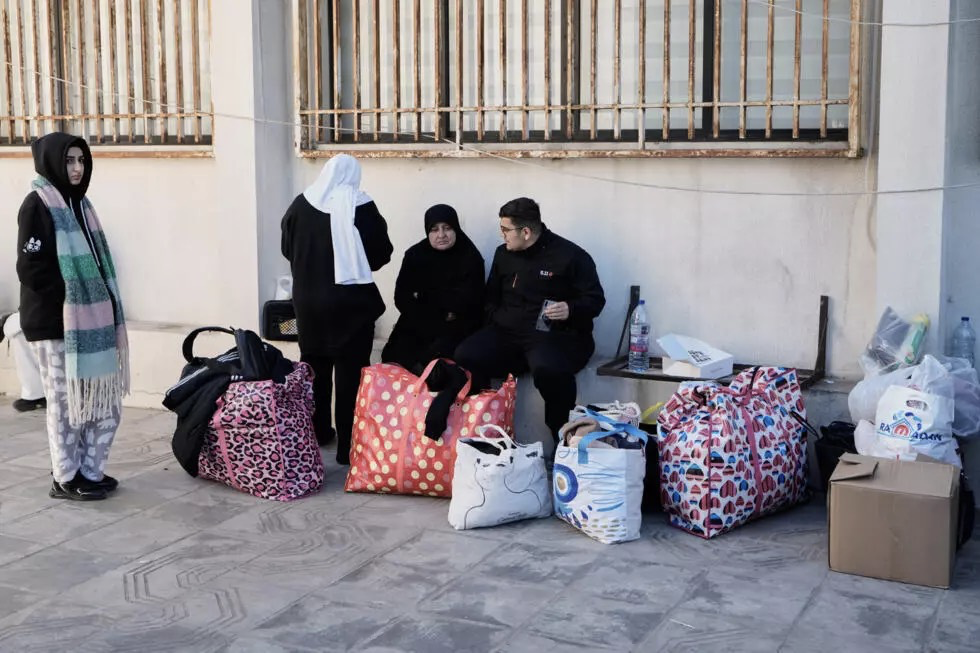
Residents in the Hezbollah stronghold began fleeing their homes on Thursday after Israel issued a stark warning: “Save your lives and evacuate your residences immediately.”
The following bombardment, which has caused widespread destruction, came after days of Israeli interventions including air strikes, troops being sent into Lebanese border villages, and orders for residents to leave a large area of south Lebanon in anticipation of operations there.
Lebanese authorities said on Friday that Israeli strikes have killed at least 217 people and wounded 798 since Monday. Around 100,000 have been driven from their homes, a senior UN official said.
As the strikes in Dahiyeh continued, Hezbollah on Friday claimed responsibility for its own wave of attacks targeting Israeli forces at border positions, the occupied Golan Heights and at a navy base in the Haifa port.
With Israel beginning the week freshly engaged in a new war in Iran, the decision on Monday to open a second front in Lebanon came in response to a Hezbollah attack, launched by the group to avenge the killing of Iran’s former supreme leader Ayatollah Ali Khamenei.
As Israel retaliated, Lebanon was drawn into a regional war that shows no signs of slowing, caught between Hezbollah and Iran on one side and the US and Israel on the other.

Israeli strikes on the densely packed southern Beirut suburb on Dahiyeh on Thursday were the latest in a string of military operations targeting Lebanonthis week.
Residents in the Hezbollah stronghold began fleeing their homes on Thursday after Israel issued a stark warning: “Save your lives and evacuate your residences immediately.”
The following bombardment, which has caused widespread destruction, came after days of Israeli interventions including air strikes, troops being sent into Lebanese border villages, and orders for residents to leave a large area of south Lebanon in anticipation of operations there.
Lebanese authorities said on Friday that Israeli strikes have killed at least 217 people and wounded 798 since Monday. Around 100,000 have been driven from their homes, a senior UN official said.
READ MOREWar in Middle East live: No deal with Iran ‘except unconditional surrender’, Trump says
As the strikes in Dahiyeh continued, Hezbollah on Friday claimed responsibility for its own wave of attacks targeting Israeli forces at border positions, the occupied Golan Heights and at a navy base in the Haifa port.
With Israel beginning the week freshly engaged in a new war in Iran, the decision on Monday to open a second front in Lebanon came in response to a Hezbollah attack, launched by the group to avenge the killing of Iran’s former supreme leader Ayatollah Ali Khamenei.
As Israel retaliated, Lebanon was drawn into a regional war that shows no signs of slowing, caught between Hezbollah and Iran on one side and the US and Israel on the other.
Hezbollah ‘provided pretext’ for Israeli attack
The military escalation has reignited internal divisions in the country. The government – which has been attempting to disarm Hezbollah for several months – on Monday held an emergency cabinet meeting during which it decided to ban its military activities.
Lebanon bans Hezbollah military activities as Middle East war spreads

Israeli strikes on Beirut’s southern suburbs on Thursday. Photograph: Mohamed Azakir/Reuters
Since a November 2024 ceasefire deal with Israel, Hezbollah’s approach has been a careful lack of response to almost daily Israeli strikes in the south of the country.
The group’s attack on Israel on Monday was “irresponsible”, Lebanese justice minister Adel Nassar told FRANCE 24. “It is inconceivable that a political party would take the initiative to fire rockets at another country, however hostile it may be.”
While he condemned Israel’s “disproportionate” response to the attacks he said it was “clear that Hezbollah deliberately and knowingly provided the pretext for Israel’s aggression”.
But Hezbollah remained defiant. Leader Naim Qassem on Wednesday used his first appearance since the start of the conflict in Iran to pledge continued attacks on Israel.
“Hezbollah and its Islamic resistance are responding to Israeli-American aggression, and that is a legitimate right,” he said in a speech broadcast by his party’s television channel. “Our choice is to confront it to the ultimate sacrifice, and we will not surrender.”
‘Deadly ideology’
Attacking Israel was a “striking political and military strategy” from Hezbollah, said Karim El Mufti, a researcher in political science and international law at Sciences Po “as it amounts to self-destruction more than anything else”.
It is possible that Hezbollah has “chosen to follow through with its suicidal and self-destructive logic”, he added.
Doing so would be in line with the group’s Shiite ideology, a central tenet of which is the suffering and martyrdom of Imam Husayn, the grandson of the Prophet Muhammad and third imam of Shiism, who was killed in 680 in Karbala and is considered the “prince of martyrs”.
But the wider Lebanese population has little appetite for such ideals. “From a strictly military point of view, the consequences for the group and for Lebanon in general have completely discredited Hezbollah in the eyes of the Lebanese population,” Mufti said.
The Lebanese government’s decision to criminalise Hezbollah’s military activities could not have been approved without backing from Shiite ministers belonging to the Amal Movement, led by Parliament Speaker Nabih Berri – formerly one of Hezbollah’s longstanding political allies.
Berri’s decision to side with the government instead of the militant group was a political shock and a symbol of Hezbollah’s newfound political isolation.
“Hezbollah knows better than anyone, having tested Israel so many times, that the Israelis would inevitably react fiercely,” said a representative from a political party that opposes Hezbollah, speaking on condition of anonymity.
“I have never seen a so-called resistance movement that is supposed to liberate the country from the occupier, do everything it can to give the occupier a pretext to send even more troops and create a buffer zone”
“If they want to commit suicide, let them go to their master in Tehran, far from Lebanon, because we can no longer tolerate their deadly ideology,” he added.
‘Patience for Hezbollah’s actions worn out’
Anger against Hezbollah is mounting beyond the political sphere, with some members of the Shiite community accusing the group of exposing their regions to further destruction.
Nassar said the wider public were tuned in to the danger “Hezbollah’s adventurism” posed “to the entire population, but more specifically to the population of the south, the Bekaa Valley, and the southern suburbs of Beirut”, which are the Shiite party’s three main strongholds.
Hezbollah said on Wednesday that its fighters were engaged in “direct” clashes with Israeli soldiers who had entered the Shiite-majority town of Khiam, 6 km from the border. The group said its operations against the Israeli military in the area were ongoing on Friday.
“The situation is critical, even tragic, as Hezbollah seems to have decided to go to war without taking into account the crises plaguing the country, including the misery and destruction already inflicted on the south during the previous conflict,” said Mahmoud Fakih, a journalist with the leading daily newspaper An-Nahar.
“In the midst of Ramadan fasting, entire families are once again being forced onto the road, searching for somewhere to sleep. In central Beirut, displaced people from southern Lebanon have been sleeping in their cars for three days, with nowhere else to go.”
“A majority of Lebanese are against this war and against the country’s involvement in this conflict, given the suffering endured just a year and a half ago. They see Hezbollah’s initiative as military and political suicide,” he added.
While there is plenty of public anger towards Israel, “there is more anger towards Hezbollah than I have ever seen since it was formed in 1982,” said Hussein Ibish, senior researcher at the Arab Gulf States Institute, speaking from Beirut.
The group is seen by many in the Shiite community and the wider population “to be recklessly dragging the country into a war it cannot afford and which has absolutely no relevance to Lebanon. Patience for this routine and the excuse of fighting Israel has worn out. It hasn’t worn thin, it’s worn out”, Ibish added.
France24/ AFP
