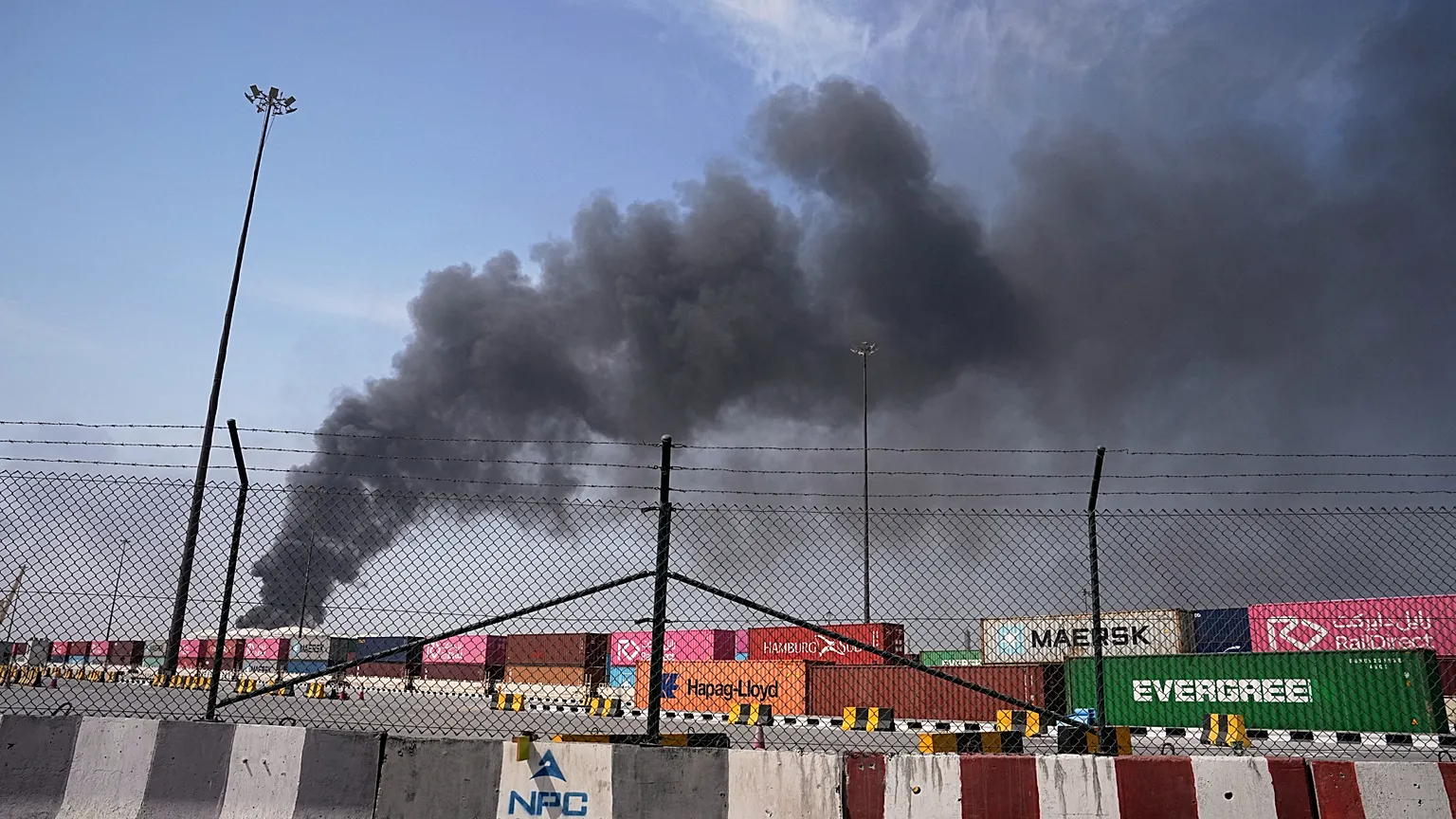
Iranian drones hit Saudi Arabia’s Ras Tanura refinery on Monday morning, while Kuwait reported intercepted attacks on day three of Iran’s retaliatory strikes on countries in the region.
A Saudi oil refinery — one of the world’s largest — suffered “limited” damage overnight from an Iranian attack, per the kingdom’s press agency and multiple news reports.
Why it matters: “The attack on Saudi Arabia’s Ras Tanura refinery marks a significant escalation, with Gulf energy infrastructure now squarely in Iran’s sights,” Torbjorn Soltvedt, a top analyst with risk intelligence firm Verisk Maplecroft, said in a note.
- The overall conflict — which included new strikes in Qatar — will push up U.S. gasoline prices, though the amount and duration depends on how high oil prices climb and for how long.
The refinery “sustained limited damage as a result of debris from the interception of two drones in its vicinity,” Saudi’s state news agency said Monday.
- There was a “limited” and now-contained fire, with no injuries reported. But “some operational units at the refinery were shut down as a precautionary measure.”
- Iran’s deputy foreign minister, Majid Takht-Ravanchi, denied his country was behind the attack.
- “We have already been in touch with our Saudi brothers, and we have talked about this issue. Iran is not responsible for the attack against the oil installations in Saudi Arabia,” Takht-Ravanchi told CNN.
Meanwhile, QatarEnergy said two of its operating facilities also were attacked and that it was halting production of liquefied natural gas and associated products.
- Qatar’s state-owned oil and gas enterprise is responsible for nearly 20% of global LNG exports.
Prices spiked when markets opened last night, with the global benchmark Brent crude hitting $82 per barrel, and then receded somewhat.
- But prices have risen again this morning on news of the refinery attack.
- Brent is trading at $79 a barrel this morning, up nearly 9% from Friday’s close.
Yes, but: The relatively limited rise suggests that traders are not yet predicting a worst-case scenario that does massive, lasting damage to oil infrastructure in Gulf states, which would send prices skyrocketing.
The Ras Tanura refinery can process 550,000 barrels per day and is close to a separate crude oil export complex.
- The refinery is a “key supplier of transport fuels like diesel for buyers in Europe and produces smaller quantities of gasoline,” per Bloomberg.
Ships are already avoiding the Strait of Hormuz, the narrow waterway abutting Iran that handles about a fourth of the world’s seaborne oil trade, for several reasons.
- Even without a physical blockade and closure, insurance rates are skyrocketing for tankers moving crude and petroleum products, analysts note.
