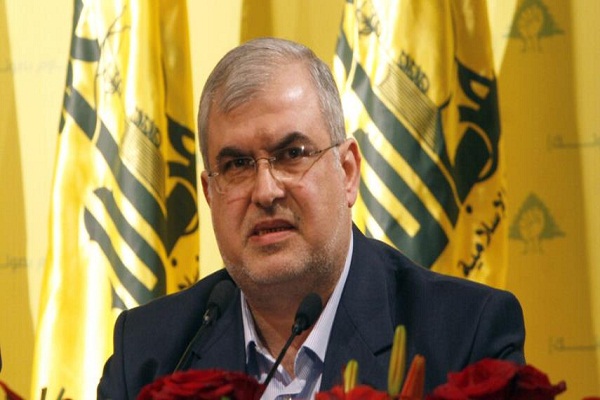
File photo of Hezbollah parliamentary bloc chief Mohammad Raad
The head of Hezbollah’s parliamentary block , MP Mohammad Raad, was killed during Israeli strikes on Hezbollah targets in Lebanon after Iran announced that Hezbollah officially entered the war and Hezbollah launched an attack against Israel
Beirut – Israeli strikes on Lebanon killed at least 31 people on Monday, authorities said, following rocket fire from Tehran-backed militant group Hezbollah after the killing of Iran‘s supreme leader.
Israel‘s military vowed to intensify its attacks on the country and make Hezbollah pay a “heavy price” after launching several strikes on Beirut‘s southern suburbs and south Lebanon, areas where Hezbollah holds sway.
Later Monday, the Lebanese government imposed an “immediate ban” on Hezbollah’s military and security activities and called on the group to hand over its weapons to the state, Prime Minister Nawaf Salam announced.
Salam announced “the immediate ban of all Hezbollah security and military activities and considering them illegal”, and demanded the party to surrender its weapons.
The escalation came as Lebanese authorities, who have been trying to spare the country from any repercussions of the US-Israeli attack on Iran, said Hezbollah’s rocket fire gave Israel “excuses” to ramp up its attacks.
Hezbollah’s attack on Israel overnight was the first time the Lebanese movement claimed responsibility for an operation against Israel since a November 2024 ceasefire sought to end over a year of hostilities between the two.
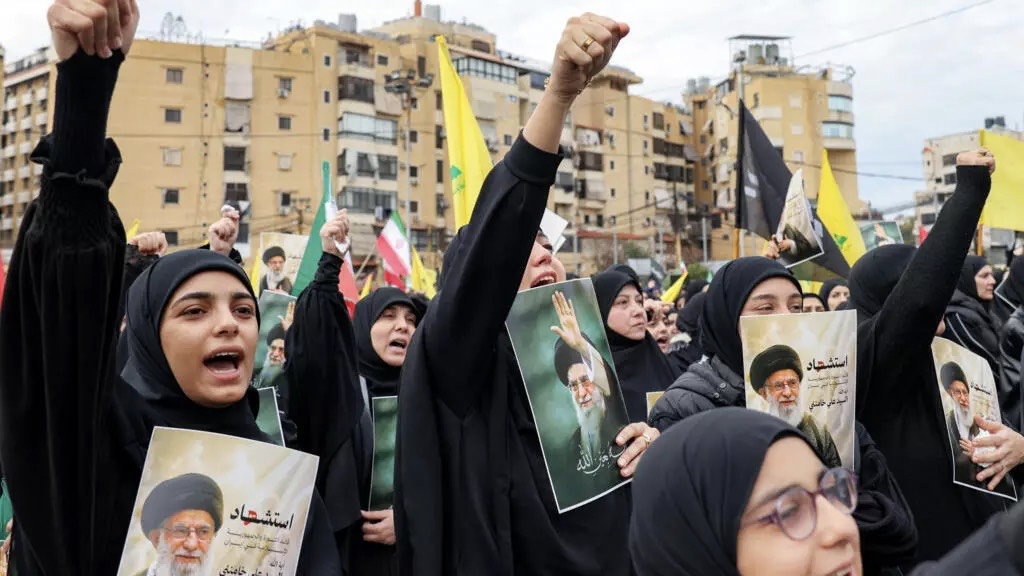
Lebanon’s Hezbollah militant group views any attack on Iran’s supreme leader as a red line. © Anwar Amro, AFP
It said the move was “retaliation for the pure blood” of Iran’s supreme leader Ayatollah Ali Khamenei, blaming his death on Israel after it launched attacks in a joint operation with the United States on Saturday.
The group announced around 3am (0100 GMT) on Monday that it had targeted an Israeli army site south of Haifa city “with a barrage of high-quality missiles and a swarm of drones“.
“Hezbollah chose the Iranian regime over the State of Lebanon and initiated an attack on our civilians … they will pay a heavy price,” said Rafi Milo, head of the Israeli military’s Northern Command.
“The strikes continue, their intensity will increase,” he was quoted as saying in a military statement hours after the first strikes were fired.
Lebanon’s health ministry gave an “initial toll” of 31 killed in Israel’s strikes, 20 in Beirut’s southern suburbs and 11 in the south. It said at least 149 were wounded.
In the capital’s southern suburbs, strikes hit the top two floors of at least two buildings, according to an AFP photographer.
A fire broke out in one of the targeted apartments.
The bombings triggered a mass exodus from the area, according to AFP correspondents, with families hastily leaving their homes on motorcycles or in cars.
Further south on the Mediterranean coast, an AFP journalist in Sidon saw huge lines of cars packed with families escaping the attacks.
Israel’s strikes hit several areas of the south including Kfur, Haris and Sultaniya.
Retaliation
Israel has carried out regular strikes on Lebanon since the 2024 ceasefire came into effect, usually saying it targets the militant group and accusing it of truce violations.
Hezbollah has been weakened from conflict with Israel, which it entered to support Hamas following the Palestinian militant group’s deadly attack on Israel in October 2023 and the subsequent war in the Gaza Strip.
On Monday, a military statement said Israeli forces “precisely struck” senior Hezbollah members in the Beirut area, and another in the south, a possible reference to Mohammad Raad
Israel then issued an evacuation warning to residents of about 50 towns and villages in Lebanon’s south and east – both Hezbollah strongholds.
The Israeli military said that “several projectiles” fired from Lebanon on Monday “fell in open areas”, with no immediate reports of damage or injuries.
‘Irresponsible’
Lebanese President Joseph Aoun said attacks from the country’s territory risked drawing the country into regional conflict.
Lebanese Prime Minister Nawaf Salam, whose government has pushed for Hezbollah’s disarmament, called Monday’s rocket fire “irresponsible”.
He vowed to “stop the perpetrators and protect the Lebanese people”.
Israeli military chief Eyal Zamir said, according to a statement, that “Hezbollah opened a campaign against Israel overnight, and is fully responsible for any escalation”.
Lebanese authorities had repeatedly said they do not wish to involve their country in the outbreak of conflict in the region, which started after a massive US-Israeli attack on Iran.
France24/ AFP
