From Carter and Khomeini to Vienna, History Is Repeating Itself
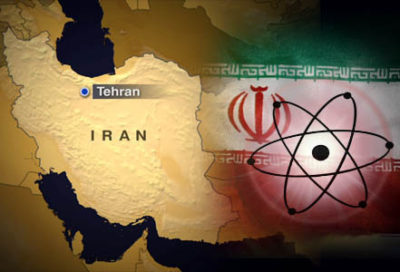
File photo : A report in late November 2020 by the International Atomic Energy Agency concluded that Iran now has more than 12 times the amount of enriched uranium permitted under a 2015 nuclear deal with world powers. It now reportedly has a stockpile of more than 400 kilograms, of 60 % enriched uranium. That is enough to produce about10 nuclear weapons if further enriched
By: Ya Libnan , Op-Ed
The United States should be extremely careful—indeed, deeply skeptical—about trusting Iran in any nuclear deal. History is not ambiguous on this point. The Iranian regime has repeatedly demonstrated that it cannot be trusted to honor agreements or assurances made to Washington. When America ignores its own experience, it does so at its own peril.
This is not theory. It has already happened.
In the late 1970s, the Carter administration placed its trust in Iran’s revolutionary leadership. Ayatollah Ruhollah Khomeini maintained direct and frequent contact with President Jimmy Carter, portraying himself as a reasonable religious figure who sought friendly relations with the United States. Khomeini urged Carter to pressure Mohammad Reza Shah Pahlavi to ensure the Iranian army remained neutral and did not interfere in the revolution.
President Carter trusted those assurances.
The result was catastrophic. Despite commanding what was then the strongest army in the Middle East, the Shah was forced to flee Iran. Shortly afterward, the U.S. Embassy in Tehran was stormed, and 52 American diplomats and staff were taken hostage for 444 days. When Khomeini returned to Iran, he declared victory over the United States and branded America “the Great Satan.”
Trust was rewarded with humiliation, hostage-taking, and decades of hostility.
Decades later, Washington made a similar mistake. Under President Barack Obama, the United States entered a nuclear agreement premised on the belief that incentives, goodwill, and phased sanctions relief could induce lasting Iranian compliance. Instead, Iran used negotiations to buy time, restrict inspections, and expand its nuclear and regional ambitions.
That same pattern is now repeating itself.
Iranian and U.S. nuclear experts were scheduled to meet next week in Vienna under the auspices of the United Nations nuclear watchdog to discuss uranium enrichment. The talks were meant to restore transparency and confidence.
Instead, Iran delivered obstruction.
According to a confidential report circulated to member states and seen by The Associated Press, Iran has denied inspectors from the International Atomic Energy Agency access to nuclear facilities damaged during a 12-day conflict in June involving Iran, Israel, and the United States. These are precisely the facilities where verification is most urgent—and where concealment is most alarming.
Blocking inspectors is not a technical dispute. It is a deliberate act of defiance.
Even more troubling, the IAEA has confirmed that Iran has accumulated more than 400 kilograms of uranium enriched to 60 percent purity—a level with no civilian justification. This material is only a short technical step away from weapons-grade enrichment and, if further refined, would be sufficient to produce multiple nuclear weapons.
Whether the number is five or ten is beside the point. One bomb is already one too many.
What makes this moment especially damning is timing. Iran was preparing to sit down with U.S. experts in Vienna while simultaneously blocking inspections, concealing damaged facilities, and stockpiling near-weapons-grade uranium. This is not diplomacy. It is deception.
A Final Warning to Congress and America’s Allies
Congress must not repeat history by outsourcing judgment to wishful diplomacy. Oversight cannot be symbolic or delayed. Any nuclear deal must require immediate, unrestricted inspections, the dismantling—not suspension—of enrichment at weapons-relevant levels, and automatic snapback penalties that cannot be waived, vetoed, or renegotiated.
Sanctions relief must follow compliance—never precede it.
America’s allies, particularly in Europe and the Middle East, should abandon the comforting illusion that Iran can be managed through partial compliance and diplomatic optimism. Stability cannot be built on denied inspections, concealed facilities, and stockpiles amassed in open defiance of international obligations.
History has already delivered its verdict. When Iran is trusted, it exploits that trust. When pressure is lifted prematurely, deception follows. And when warnings are ignored, the consequences are severe, lasting, and often irreversible.
This is not a moment for diplomatic fatigue or political convenience.
It is a moment for clarity, firmness, and resolve.
History is watching—and it will not be forgiving.
