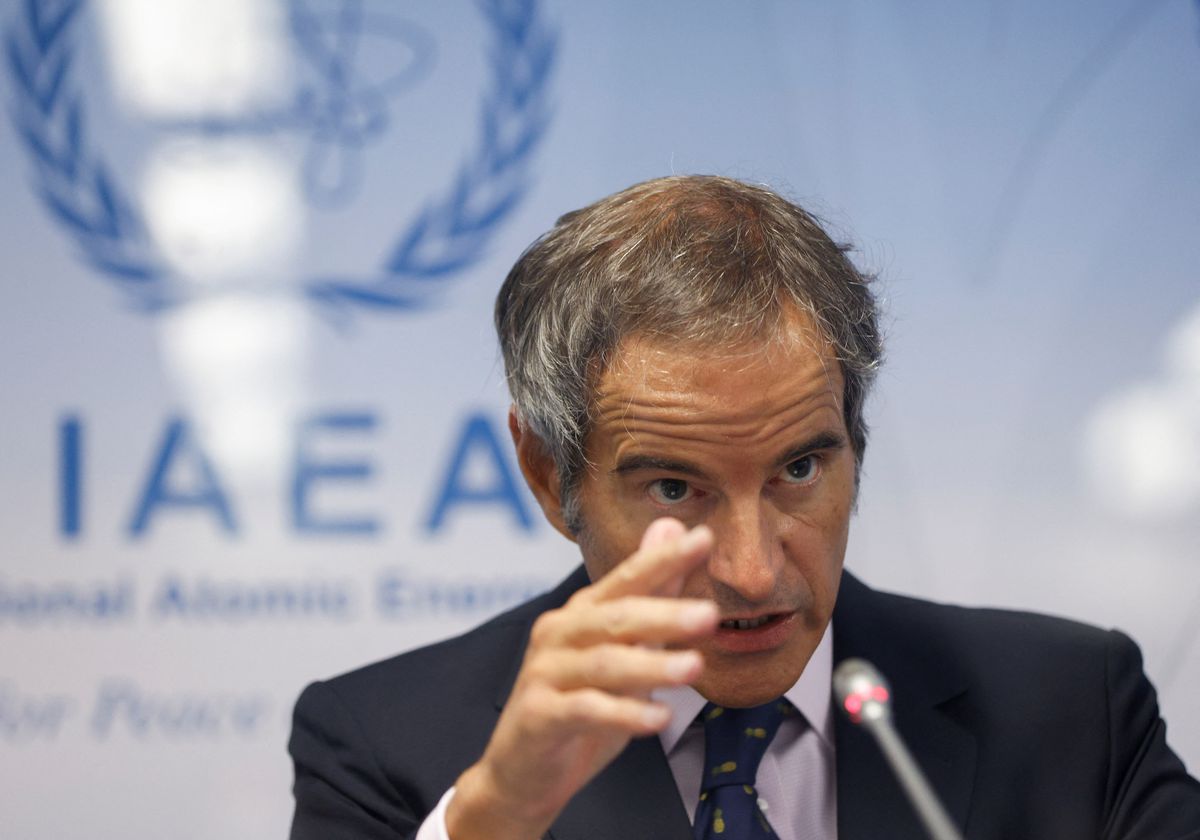
File :International Atomic Energy Agency Director General Rafael Grossi speaks during a news conference at an IAEA Board of Governors meeting in Vienna, Austria, September 13, 2021. REUTERS/Leonhard Foeger/File Photo
UN nuclear chief Rafael Grossi has joined the new round of indirect talks taking place Thursday between Iran and the United States in Geneva, a source close to the talks told AFP.
An Iranian state TV reporter also said that Grossi had “joined the talks, effectively serving as a technical observer who can help advance the discussions more precisely and seriously”.
According to the information, Grossi joined the talks to clarify technical issues related to Iran’s nuclear program.
Indirect U.S.–Iran nuclear talks in Geneva are continuing after a brief pause earlier this morning, but Iran’s foreign ministry says the opening three‑hour session was “very serious,” signaling cautious optimism even as both sides step away to consult their capitals. Spokesperson Esmail Baghaei said the delegations exchanged “important and practical” proposals on sanctions relief and the nuclear file, adding that Tehran feels “confident” heading into the next round later tonight.
The meeting is viewed as one of the last viable chances to prevent a wider regional conflict. The discussions come as President Donald Trump continues to threaten limited military action if no nuclear agreement is reached, while Iran warns it will respond forcefully to any strike.
What to Know:
- Both sides broke for consultations after roughly three hours, a sign that enough material had been exchanged to warrant internal review before continuing at 5:30 p.m. local time, or 11:30 a.m. Eastern.
- Baghaei offered no specifics but emphasized that discussions on both enrichment limits and sanctions relief were pursued with “great seriousness.”
- Talks are being held at the Omani ambassador’s residence, with Oman’s foreign minister again mediating.
- Oman says negotiators have shown “unprecedented openness” to new ideas, but the path to a deal remains uncertain.
- The US has deployed its largest military buildup in the Middle East since 2003, including two aircraft carriers and thousands of troops.
- Trump says diplomacy is his preference, but continues to float the possibility of a limited strike to pressure Iran.
- The president has not clearly outlined what concessions he is demanding or why military action is needed now.
- Iran rejects halting uranium enrichment but signals willingness to consider concessions on its nuclear program.
- Iran’s foreign minister says the country will “under no circumstances ever develop a nuclear weapon,” calling the moment a “historic opportunity.”
- US media reports say Trump is weighing an initial strike on Revolutionary Guards or nuclear sites if talks stall.
- Senior US military officials have reportedly warned that strikes could trigger a prolonged conflict.
- Israel urges any deal to include limits on Iran’s missiles and regional proxies, while regional allies fear escalation.
- Iran threatens to retaliate against US and Israeli military assets if attacked.
- The talks follow last year’s US and Israeli strikes on Iranian nuclear facilities, which Iran says halted enrichment but remain unverified by inspectors.
- Newsweek
