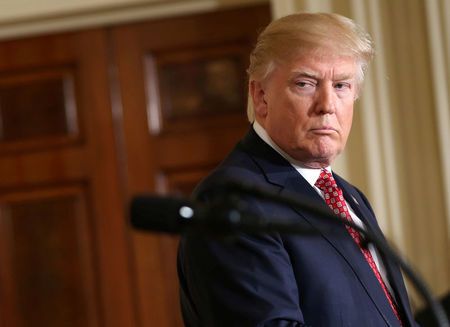
President Trump has told advisers that if diplomacy or any initial targeted U.S. attack does not lead Iran to give in to his demands that it give up its nuclear program, he will consider a much bigger attack in coming months intended to drive that country’s leaders from power, people briefed on internal administration deliberations said.
Negotiators from the United States and Iran are scheduled to meet in Geneva on Thursday for what appears to be last-ditch negotiations to avoid a military conflict. But Mr. Trump has been weighing options for U.S. action if the negotiations fail.
Though no final decisions have been made, advisers said, Mr. Trump has been leaning toward conducting an initial strike in coming days intended to demonstrate to Iran’s leaders that they must be willing to agree to give up the ability to make a nuclear weapon.
Targets under consideration range from the headquarters of Iran’s Islamic Revolutionary Guard Corps to the country’s nuclear sites to the ballistic missile program.
Should those steps fail to convince Tehran to meet his demands, Mr. Trump told advisers, he would leave open the possibility of a military assault later this year intended to help topple Ayatollah Ali Khamenei, the supreme leader.
There are doubts even inside the administration about whether that goal can be accomplished with airstrikes alone. And behind the scenes, a new proposal is being considered by both sides that could create an off-ramp to military conflict: a very limited nuclear enrichment program that Iran could carry out solely for purposes of medical research and treatments.
It is unclear whether either side would agree. But the last-minute proposal comes as two aircraft carrier groups and dozens of fighter jets, bombers and refueling aircraft are now massing within striking distance of Iran.
Mr. Trump discussed plans for strikes on Iran in the White House Situation Room on Wednesday. The meeting included Vice President JD Vance; Secretary of State Marco Rubio; Gen. Dan Caine, the chairman of the Joint Chiefs of Staff; the C.I.A. director, John Ratcliffe; and Susie Wiles, the White House chief of staff.
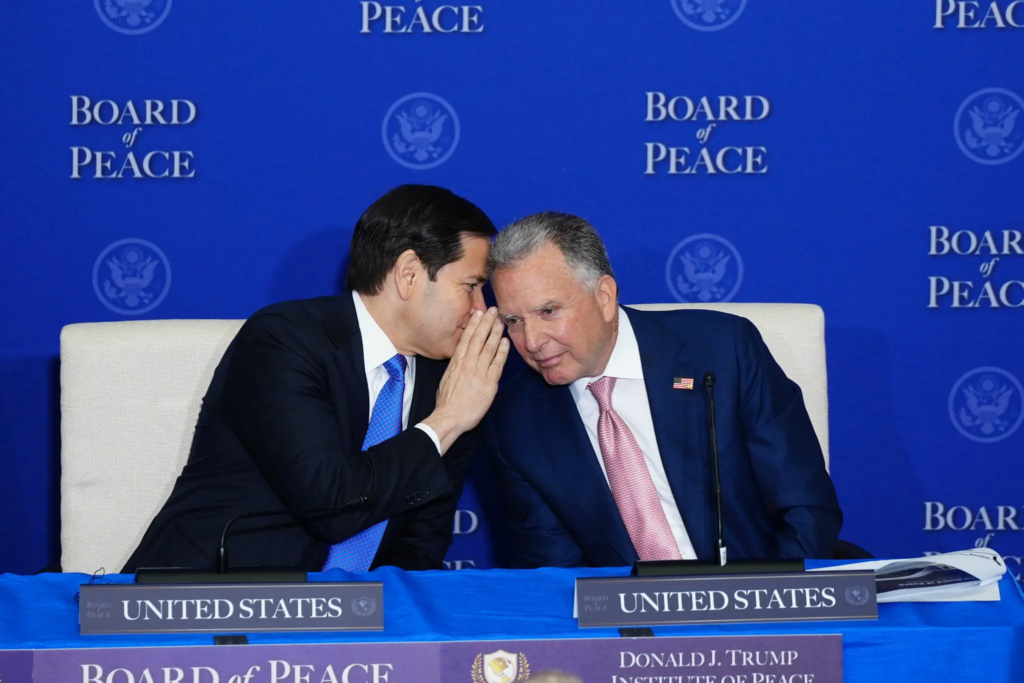
Secretary of State Marco Rubio, left, and Steve Witkoff, Mr. Trump’s special envoy, last week. Mr. Rubio and other aides have described a range of rationales for military action against Iran.Credit…Tierney L. Cross/The New York Times
During the meeting, Mr. Trump pressed General Caine and Mr. Ratcliffe to weigh in on the broader strategy in Iran, but neither official generally advocates a certain policy position. General Caine discussed what the military could do from an operational standpoint, and Mr. Ratcliffe preferred to discuss the current situation on the ground and possible outcomes of proposed operations.
During the discussions of the operation last month to seize President Nicolás Maduro of Venezuela, General Caine told Mr. Trump there was a high likelihood of success. But General Caine has not been able to deliver the same reassurances to Mr. Trump during the Iran discussions, in large measure because it is a far more difficult target.
Mr. Vance, who has long called for more restraint in overseas military action, did not oppose a strike, but he intensely questioned General Caine and Mr. Ratcliffe in the meeting. He pressed them to share their opinions of the options and wanted more of a discussion of the risks and complexity of carrying out a strike against Iran.
Earlier, the United States had been considering options that included putting teams of special operations forces on the ground that could carry out raids to destroy Iranian nuclear or missile facilities. That included manufacturing and enrichment operations buried far below the surface, outside the range of American conventional munitions.
But any such raid would be highly dangerous, requiring special operations forces to be on the ground far longer than they were for the raid to capture Mr. Maduro. Multiple U.S. officials said that for now, the plans for a commando raid had been shelved.
Army, Navy and Air Force officials have also raised concerns about the impact that a protracted war with Iran, or just remaining poised for such a conflict, could have on the readiness of Navy ships, scarce Patriot antimissile defenses, and overstretched transport and surveillance planes.
The White House declined to comment on Mr. Trump’s decision making.
“The media may continue to speculate on the President’s thinking all they want, but only President Trump knows what he may or may not do,” Anna Kelly, a White House spokeswoman, said in a statement.
Even before the Iranians submit what appears likely to be their last proposal — officials said they expected it to be transmitted to the Trump administration on Monday or Tuesday — the two sides appeared to be hardening their positions. Steve Witkoff, the president’s special envoy, said on Fox News that Mr. Trump’s “clear direction” to him and Jared Kushner, his co-negotiator and the president’s son-in-law, was that the only acceptable outcome for an agreement was that Iran would move to “zero enrichment” of nuclear material.
But Iran’s foreign minister, Abbas Araghchi, insisted anew in an interview on CBS’s “Face the Nation” on Sunday that the country was not ready to give up what he said was its “right” to make nuclear fuel under the Nuclear Nonproliferation Treaty. With that statement, the decision about whether the United States was about to attack targets in Iran — with the apparent goal of further weakening the government of Mr. Khamenei — seemed to come down to whether both sides could agree to a face-saving compromise about nuclear production that Washington and Tehran could each describe as a total victory.
New York Times
