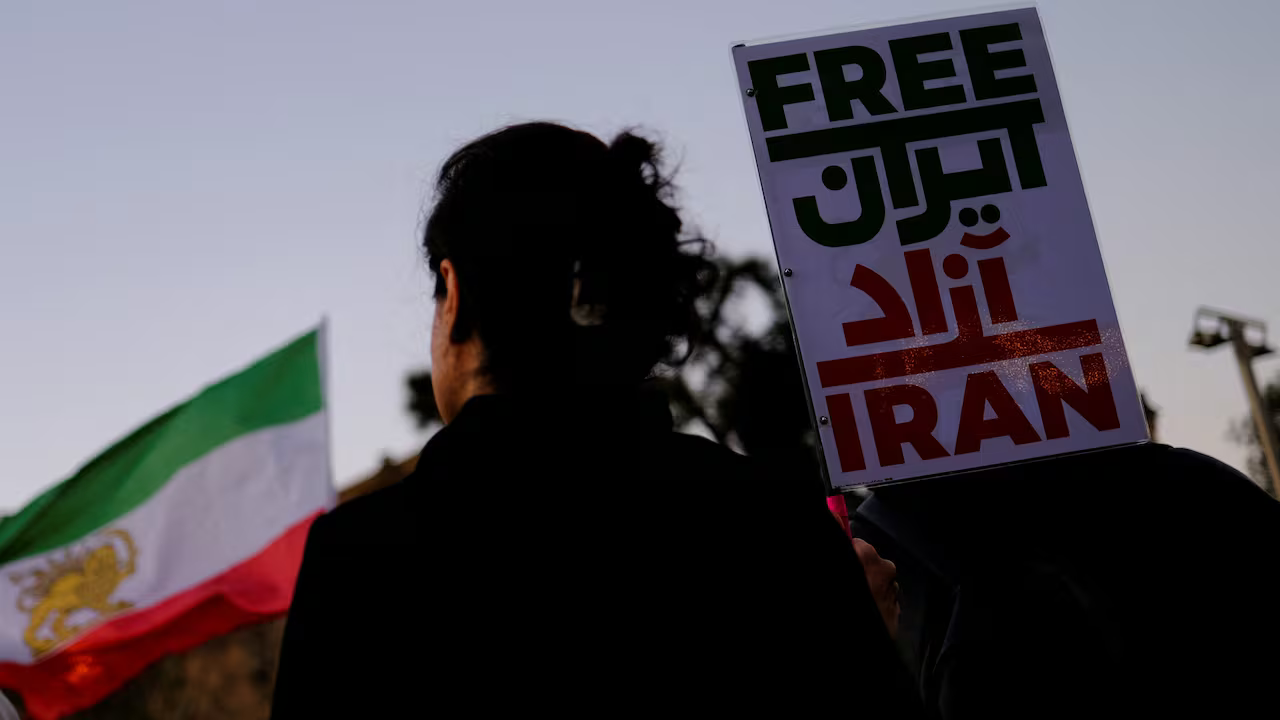
An Iranian resident takes part in a protest against Iran’s government amid a massive U.S. military buildup in the Middle East, in Barcelona, Spain, on Saturday. (Nacho Doce/Reuters)
U.S. President Donald Trump is curious about why Iran has not yet “capitulated” and agreed to curb its nuclear program, as Washington builds up its military capability in the Middle East, Trump’s special envoy, Steve Witkoff, said.
“I don’t want to use the word ‘frustrated,’ because he understands he has plenty of alternatives, but he’s curious as to why they haven’t … I don’t want to use the word ‘capitulated,’ but why they haven’t capitulated,” Witkoff said in an interview on Fox News on Saturday.
“Why, under this pressure, with the amount of sea power and naval power over there, why haven’t they come to us and said, ‘We profess we don’t want a weapon, so here’s what we’re prepared to do’? And yet it’s sort of hard to get them to that place.”
Trump has ordered a huge buildup of forces in the Middle East and preparations for a potential multi-week air attack on Iran. Iran has threatened to strike U.S. bases if it is attacked.
The United States wants Iran to give up enriched uranium, which Washington says can potentially be used to make a bomb, as well as stop supporting militants in the Middle East and accept limits to its missile program.
Because we are Iranian
Iran’s Foreign Minister responded tonight to Trump’s reported curiosity about why Iran has not surrendered despite the military hardware surrounding it, asking: “Are you curious to know why we do not surrender? Because we are Iranian.”
Tehran says its nuclear program is peaceful, but it is willing to accept some curbs on it in return for the lifting of financial sanctions. It rejects tying this to other issues, such as missiles and support for armed proxies .
“They’ve been enriching well beyond the number that you need for civil nuclear. It’s up to 60 per per cent [fissile purity],” Witkoff said. “They’re probably a week away from having industrial-grade bomb-making material, and that’s really dangerous.”
A senior Iranian official told Reuters on Sunday that Iran and the United States still have differing views over sanctions relief in talks.
Earlier in February, Reza Pahlavi , son of the Shah of Iran said U.S. military intervention in Iran could save lives, and he urged Washington not to spend too long negotiating with Tehran’s clerical rulers on a nuclear deal.
CBC
