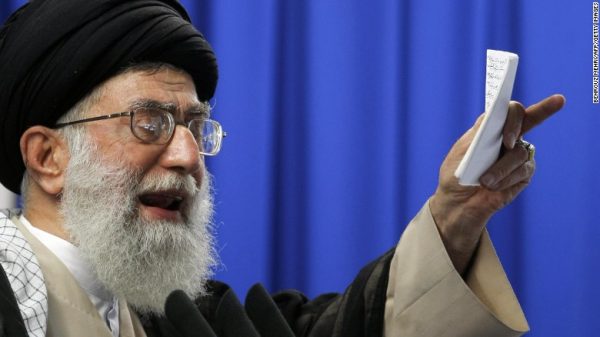
Iran’s supreme leader has issued instructions to senior aides establishing chains of command and authority transfer protocols should he be killed in an attack, as Tehran puts forces on high alert.
Ayatollah Ali Khamenei has issued emergency instructions to senior aides outlining succession procedures and command structures in the event he is killed in a potential US or Israeli attack, The New York Times reported Thursday, citing Iranian officials, Revolutionary Guards members, and former diplomats. The preparations come as Washington considers military options following stalled nuclear negotiations.
Larijani in charge of state affairs
According to the report, Khamenei’s directives cover authority delegation and command chains for emergency situations, establishing multiple layers of successors for key military and political positions. If communications are severed or he is killed, decision-making authority would transfer to close associates. The report also claims Khamenei elevated Ali Larijani, secretary of Iran’s Supreme National Security Council, to a central management role during recent protests, effectively placing him in charge of state affairs. Larijani reportedly managed crackdowns on demonstrations, handled sensitive nuclear diplomacy with Washington, and coordinated with allies including Russia, Qatar, and Oman while conducting war planning against potential US attacks.
Military Readiness
Iran has placed its armed forces on high alert, deploying missiles around Iraq and the Persian Gulf while conducting military exercises in preparation for possible conflict. Public statements from Khamenei have maintained a defiant tone, promising strong retaliation against any attack. The military posture reflects Tehran’s assessment that the window for diplomacy may be closing, with President Trump stating clarity on a potential deal would emerge within days and warning that without agreement “bad things happen.”
Succession Context
Sources emphasize that Larijani is not viewed as Khamenei’s likely successor but rather as one of his most trusted crisis managers. The succession planning underscores the gravity with which Tehran views the current threat environment, with contingency preparations extending to the highest levels of leadership. As Washington reviews military options ranging from limited strikes to broader campaigns, Iran’s leadership is taking unprecedented steps to ensure continuity of command should the supreme leader become a target.
Based on reports from Iran Ali Larijani is not a senior Shiite cleric, which is considered a fundamental qualification for becoming the Supreme Leader of Iran.
Mojtaba Khamenei, the second son of the Supreme Leader is frequently cited as a top contender to succeed his father, known for his influence within the Islamic Revolutionary Guard Corps (IRGC) and control over a vast financial network. However, his potential succession faces challenges regarding legitimacy, as some reports suggest a deliberate move away from dynastic rule and that he was omitted from a recent list of proposed successors.
YANI SAFAK
