By Farnaz Fassihi , Farnaz Fassihi
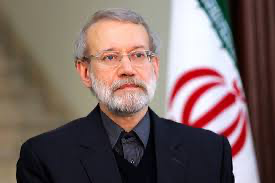
Ayatollah Ali Khamenei has entrusted Ali Larijani, the top national security official, to ensure the Islamic Republic endures any military attacks and targeted killings.
In early January, as Iran faced nationwide protests and the threat of strikes by the United States, the nation’s supreme leader, Ayatollah Ali Khamenei, turned to a trusted and loyal lieutenant to steer the country: Ali Larijani, the country’s top national security official.
Since then, Mr. Larijani, 67, a veteran politician, a former commander in the Revolutionary Guards Corps and the current head of the Supreme National Security Council, has effectively been running the country. His rise has sidelined President Masoud Pezeshkian, a heart surgeon turned politician, who has faced a challenging year in office and continues to say publicly that “I’m a doctor, not a politician,” and that no one should expect him to solve the multitude of problems in Iran.
This account of Mr. Larijani’s ascent and the decisions and deliberations of Iran’s leadership as the Trump administration threatens war is based on interviews with six senior Iranian officials, one of them affiliated with Ayatollah Khamenei’s office; three members of the Revolutionary Guards; two former Iranian diplomats; and reports from the Iranian news media. The officials and members of the Guards spoke on the condition of anonymity to candidly discuss internal government matters.
Mr. Larijani’s portfolio of responsibilities has grown steadily over the past few months. He was in charge of crushing, with lethal force, the recent protests demanding the end of Islamic rule. Currently, he is keeping a lid on dissent, liaising with powerful allies like Russia and regional actors like Qatar and Oman, and overseeing nuclear negotiations with Washington. He is also devising plans for managing Iran during a potential war with the United States as Washington amasses forces in the region.
“We are ready in our country,” Mr. Larijani said in an interview with Al Jazeera when he visited the Qatari capital, Doha, this month. “We are definitely more powerful than before. We have prepared in the past seven, eight months. We found our weaknesses and fixed them. We are not looking for war, and we won’t start the war. But if they force it on us, we will respond.”
Ayatollah Khamenei has instructed Mr. Larijani and a handful of other close political and military associates to ensure that the Islamic Republic survives not only American and Israeli bombs, but also any assassination attempts on its top leadership, including on Ayatollah Khamenei himself, according to the six senior officials and the Guards members.
Nasser Imani, a conservative analyst close to the government, said in a telephone interview from Tehran that Ayatollah Khamenei has a long and close relationship with Mr. Larijani, and the supreme leader turned to him in this time of acute military and security crisis.
“The supreme leader fully trusts Larijani. He believes Larijani is the man for this sensitive juncture because of his political track record, sharp mind and knowledge,” Mr. Imani said. “He relies on him for reports on the situation and pragmatic advice. Larijani’s role will be very pronounced during war.”
Mr. Larijani comes from an elite political and religious family, and for 12 years, he was the speaker of Parliament. In 2021, he was put in charge of negotiating a 25-year comprehensive strategic deal with China worth billions.
What you should know about anonymous sources. The Times makes a careful decision any time it shields the identity of a source. The information the source supplies must be newsworthy, credible and give readers genuine insight.
According to the six senior officials and the Guards members, Ayatollah Khamenei has issued a series of directives. He has named four layers of succession for each of the military command and government roles that he personally appoints. He has also told everyone in leadership roles to name up to four replacements and has delegated responsibilities to a tight circle of confidants to make decisions in case communications with him are disrupted or he is killed.
While in hiding last June during 12 days of war with Israel, Ayatollah Khamenei named three candidates who could succeed him. They have never been publicly identified. But Mr. Larijani is almost certainly not among them because he is not a senior Shiite cleric — a fundamental qualification for any successor.
Mr. Larijani is, however, ensconced in Ayatollah Khamenei’s trusted circle. That includes his top military adviser and former commander in chief of the Guards, Maj. Gen. Yahya Rahim Safavi. It also includes Brig. Gen. Mohammad Bagher Ghalibaf, a former Guards commander and current speaker of Parliament whom Ayatollah Khamenei has designated as his de facto deputy to command the armed forces during war, and his chief of staff, the cleric Ali Asghar Hejazi.
Some of this planning is the result of lessons drawn from Israel’s surprise attack in June, which wiped out Iran’s senior military command chain within the first hours of the war. After the cease-fire, Ayatollah Khamenei appointed Mr. Larijani as the secretary of the National Security Council and created a new National Defense Council, headed by Adm. Ali Shamkhani, to manage military affairs during wartime.
“Khamenei is dealing with the reality in front of him,” said Vali Nasr, an expert on Iran and its Shiite theocracy at the Johns Hopkins School of Advanced International Studies.
“He is expecting to be a martyr and thinking, this is my system and legacy, and I will stand until the end,” Mr. Nasr said. “He is distributing power and preparing the state for the next big thing, both succession and war, aware that succession may come as a consequence of war.”
Iran is operating on the basis that U.S. military strikes are inevitable and imminent, even as both sides continue to engage diplomatically and negotiate on a nuclear deal, the six officials and three Guards members said. They said Iran had placed all of its armed forces on the highest state of alert and was preparing to resist fiercely.
The country is positioning ballistic missile launchers along its western border with Iraq — close enough to strike Israel — and along its southern shores on the Persian Gulf, within range of American military bases and other targets in the region, the three Guards members and four senior officials said.
The New York Times
