Congress Pushes Back — and the Supreme Court May Have to Finish the Job
By Ya Libnan Editorial Board, Op.Ed.
A rare bipartisan rebuke exposes the economic folly — and political danger — of weaponizing trade against America’s closest ally
Opponents of President Trump’s tariffs on Capitol Hill scored a rare and meaningful victory this week, cracking open the door to renewed scrutiny of one of his most damaging economic policies.
The breakthrough began Tuesday with a narrow 217–214 vote defeating a maneuver designed to freeze tariff-related resolutions until August. That procedural win set the stage for a more consequential vote the following day — one that directly challenged Trump’s tariffs on Canada.
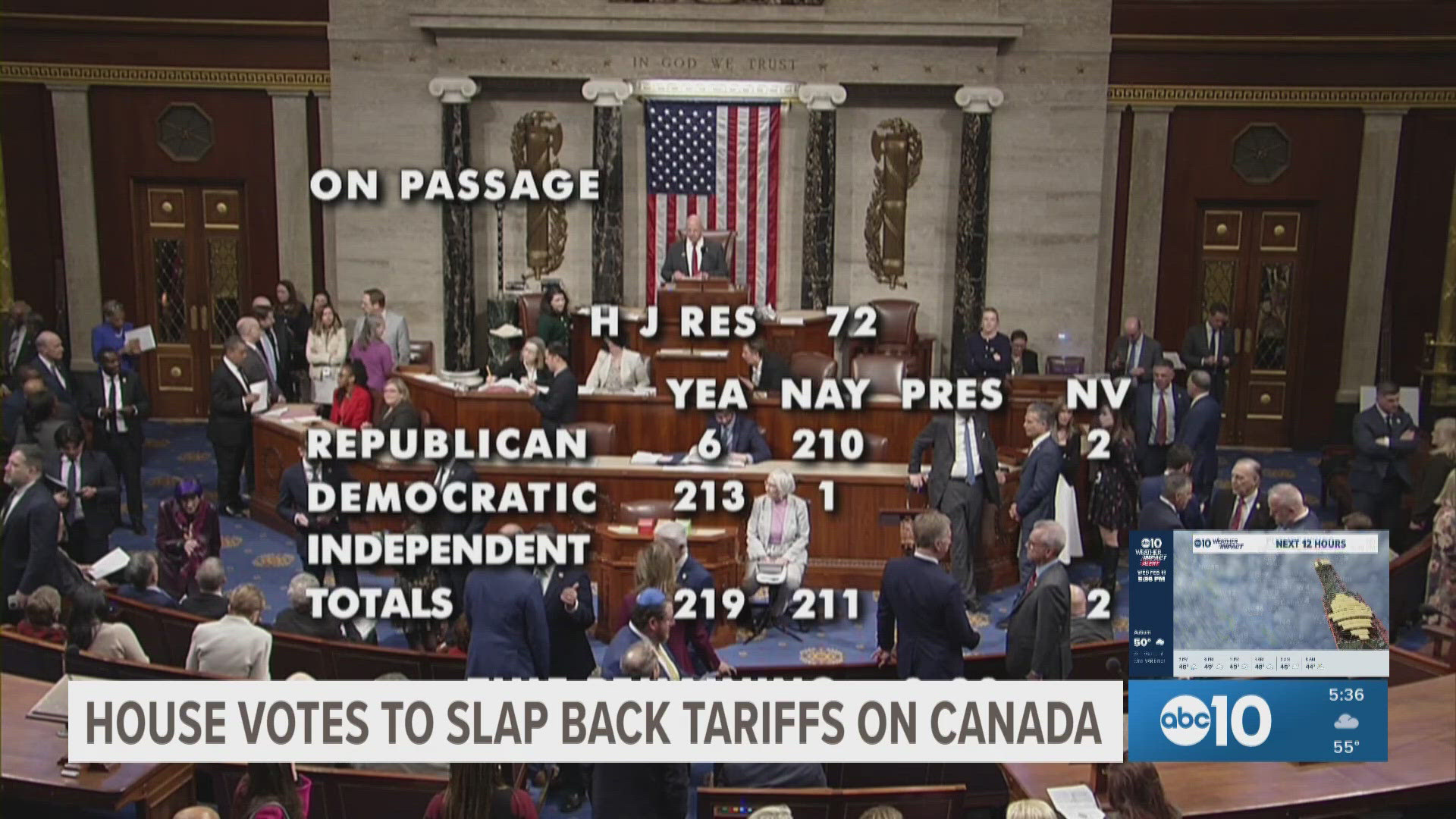
On Wednesday, the House passed Joint Resolution 72 by a wider 219–211 margin, seeking to terminate a national emergency Trump declared last February to justify imposing tariffs on Canada under the pretext of illegal drug trafficking. Nearly every Democrat voted in favor, joined by six Republicans who chose principle over intimidation.
Those six lawmakers — acting with notable political courage — crossed party lines despite explicit threats from the president. Just hours before the vote, Trump warned on Truth Social that Republicans opposing his tariffs would “seriously suffer the consequences come Election time.”
They voted yes anyway.
Their message was clear: Congress, not the president, holds the constitutional power over trade — and Canada should not be treated as an adversary.
Canada is America’s closest ally, largest trading partner, and friendliest neighbor. It shares intelligence, defends North America through NATO and NORAD, and supports U.S. global leadership at every turn. Bullying such a partner through punitive tariffs is not strength; it is self-inflicted damage masquerading as toughness.
History is unequivocal on this point. Tariffs have repeatedly failed the United States. They raise costs for American consumers, disrupt supply chains, invite retaliation, and destroy jobs — especially in manufacturing and agriculture. They function as hidden taxes on American families while weakening U.S. competitiveness.
Even if this resolution never becomes law — Trump is almost certain to veto it — the significance of the vote should not be underestimated. It is the first serious congressional challenge to a growing web of national emergency declarations issued over the past 13 months to bypass legislative authority and impose tariffs unilaterally.
That precedent is dangerous. Emergency powers were never meant to serve as a blank check for economic coercion — especially against allies.
Our hope now is that the U.S. Supreme Court will recognize what Congress has begun to confront: that these tariffs rest on a legal and constitutional abuse of emergency authority. Rejecting them would not only protect American consumers and workers, but also reaffirm the balance of powers that underpins U.S. democracy.
It really will take judicial courage, not politics, to stop this abuse of “emergency” powers. Tariffs by decree — especially against allies like Canada — were never what Congress intended, and the Court exists precisely for moments like this: when executive power stretches beyond the Constitution and needs to be pulled back.
History tends to remember judges who defend the rule of law, not those who look the other way out of fear or convenience. If the Supreme Court chooses independence over intimidation, it won’t just be checking Trump — it will be protecting Congress’s authority, American consumers, and the credibility of the United States itself.
Let’s hope they show the same kind of guts those six lawmakers did.
