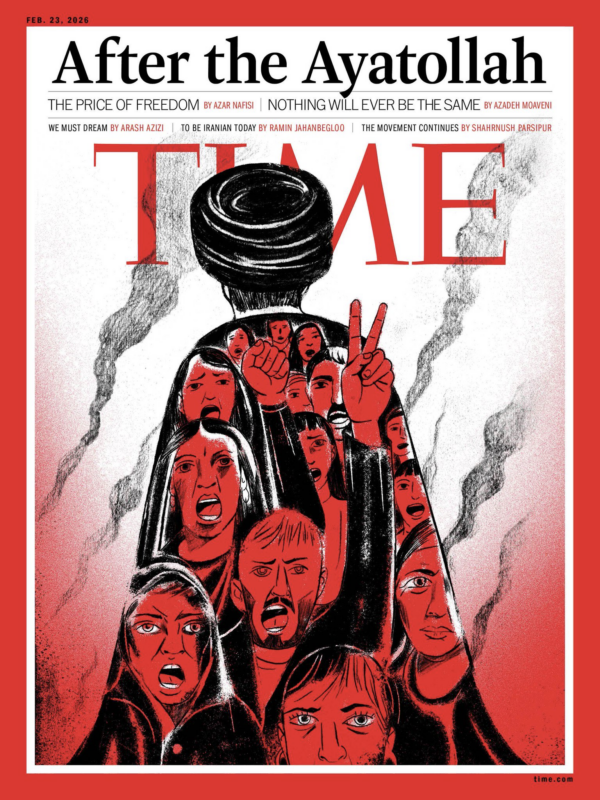
Time magazine’s February 2026 cover, “After the Ayatollah,” depicts the potential end of Iran’s regime amid intense, deadly crackdowns on nationwide protests and significant, sustained pressure on Supreme Leader Ali Khamenei
. The cover highlights a vulnerable regime and questions the future of Iran, with some analysts viewing it as a pivotal, non-sustainable moment in Iran’s history.
Key Aspects of the “After the Ayatollah” Scenario:
- Protests and Crackdown: The cover, illustrated by Edel Rodriguez, reflects massive protests and one of the most severe government crackdowns in decades.
- Regime Vulnerability: Reports suggest the Iranian regime is facing increased pressure from both internal protests and, as described by some, potential U.S. military action.
- Regime Survival Questions: Analysts compare the current, precarious situation in Iran to the final years of other major, falling regimes, suggesting the regime in Tehran is struggling to maintain control, unlike in previous, smaller waves of protests.
- Context: The cover has generated significant discussion regarding the potential, long-term impact of this period on Iran’s political structure and its future after the current leadership.
Background and Similar Historical Context:
- This is not the first time Time Magazine has covered major shifts in Iran, with previous issues exploring the legacy of the 1979 revolution and the reign of Ayatollah Khomeini, as well as earlier, major, social, uprisings in Iran.
- Time magazine’s June 2025 cover featuring Iranian Supreme Leader Ayatollah Ali Khamenei sparked criticism online, with users accusing the publication of drumming up support for the idea of regime change in Iran following Israel‘s surprise attack on the country
- The current situation in Iran is often compared to the final years of the Soviet Union.
- The February report explores various scenarios for the country’s succession following Khamenei’s retreat from public view, including a potential shift towards a security state.
