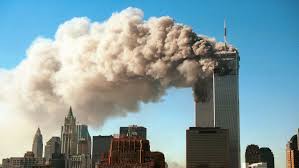
The September 11 attack on the Twin Towers in New York City led to NATO invoking Article 5. .The Article has only been triggered once in the existence of the alliance
Why ingratitude toward America’s allies is no longer provocative — but dangerous
BY : Ya Libnan
President Donald Trump has long thrived on conflict. Provocation has been his fuel, outrage his currency. But at the World Economic Forum in Davos, something shifted. His remarks toward NATO and America’s allies were not merely confrontational — they were repetitive, ungrateful, and historically careless. The danger now is not that Trump shocks the world, but that he bores it — and in doing so, undermines America’s credibility.
At Davos, Trump once again dismissed NATO allies as burdens rather than partners, recycling grievances about defense spending and questioning their value to the United States. What he failed to acknowledge — or chose to ignore — is a fact the world remembers clearly: after the September 11 attacks, NATO invoked Article 5 for the first and only time in its history, declaring that an attack on the United States was an attack on all.
Allied nations did not hesitate. British, Canadian, Danes, German, French, Italian, Polish, and other NATO soldiers deployed to Afghanistan not for their own national interest, but in solidarity with the United States. Hundreds of them never returned home. They died fighting in a war that began as an act of loyalty to America.
One may debate the wisdom, execution, or ultimate failure of the Afghanistan war — but to erase the sacrifice of allies from the narrative is not leadership. It is ingratitude. And ingratitude, when repeated often enough, becomes policy.
Trump’s problem today is not that he is unpredictable. He is increasingly predictable. The same grievances. The same targets. The same transactional view of alliances. What once felt disruptive now feels stale. What once commanded attention now induces fatigue.
For America’s allies, this matters deeply. Alliances are not vending machines. They are built on trust, memory, and mutual respect. When a U.S. president treats loyalty as weakness and gratitude as optional, he weakens the very structures that have preserved Western security for decades.
The world is no longer shocked by President Trump’s rhetoric; it has heard it too many times. What once passed for disruption now registers as disregard — for history, for sacrifice, and for allies who answered America’s call when it mattered most. Conflict may still energize Trump, but it no longer energizes the world.
Leadership is not measured by how loudly one complains, but by how faithfully one remembers. America’s allies remember invoking Article 5. They remember Afghanistan. They remember the cost they paid in blood and lives — even if the U.S. president does not.
If Trump continues to treat loyalty as a transaction and gratitude as optional, he risks more than boredom. He risks hollowing out the alliances that have protected America for generations. And in a world growing more dangerous by the day, an America that forgets its friends does not project strength — it broadcasts fragility.
