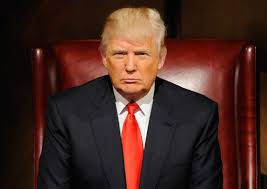
As 79-year-old US President Donald Trump enters the second year of his second term, questions about his physical and cognitive health are a recurring topic amid viral images, defiant responses from the White House and a lack of medical disclosure. The debate echoes earlier controversies around the health of US leaders – and raises uncomfortable questions about transparency and power.
It took only a few minutes of footage to reignite the debate. During a 9/11 commemoration in September, cameras caught what appeared to be a pronounced droop on the right side of Trump’s face.
The images quickly went viral. “So this guy like 100% had a stroke, right?” podcaster Jeremy Kaplowitz wrote on X that same day, a post later liked more than 272,000 times. The White House did not immediately comment. On January 15, however, the Daily Beast reported a theory from Professor Bruce Davidson of Washington State University’s Elson S. Floyd College of Medicine, suggesting a medical episode “six months ago or more, earlier in 2025”. Davidson also noted that Trump began shuffling his feet while walking and was “garbling” his words.
Washington quickly pushed back, dismissing the report as a “BS fake news story.”
Life under a microscope
Since returning to the Oval Office, close scrutiny of Trump’s public appearances have sparked numerous rumours about his declining health. The White House has sometimes offered rather unexpected explanations. Bruises seen on his hands during a February meeting with French President Emmanuel Macron were attributed to the fact that he is “constantly working and shaking hands all day, every day”, Press Secretary Karoline Leavitt said.
When images showed Trump with swollen ankles and struggling to walk steadily, Leavitt said the president suffers from a “chronic venous deficiency”, adding that there was “no evidence of deep vein thrombosis (DVT) or arterial disease”. But unlike previous presidents, no full medical records have been released – only summarised memoranda from White House physician Dr Sean Barbabella have been made public.
“Let’s be clear: we have no idea what his health condition is. All we can really assess is what we see,” presidential historian Barbara Perry says. “And what we witness is an almost octogenarian man who keeps nodding off at public events, and whose speeches can be … quite strange.”
WATCH MOREWhy the change of heart? Trump dials down threats of strikes against Iran
Trump’s lifestyle has also drawn significant attention. He has long dismissed the value of exercise and openly embraces fast food. After returning to the Oval Office following his inauguration, he quickly had the famous Diet Coke button – a red button on his desk that summons staff to deliver his preferred soda – reinstalled, echoing the setup of his first term.
When Trump’s controversial health secretary, Robert F. Kennedy Jr., was asked about Trump’s diet, he reportedly replied: “I don’t know how he is alive.”
Turning suspicion into confrontation
Trump’s family history – his father Fred died after suffering from Alzheimer’s disease – is frequently cited by critics including his niece, psychologist Mary Trump. But doctors warn against drawing simplistic conclusions based loosely on genetics. The Alzheimer’s Association notes that, although family history can affect the level of risk, lifestyle factors play a significant role.
To fend off questions about his mental fitness, Trump has repeatedly boasted that he “aced” several cognitive exams, claiming “perfect” scores not just as proof of his fitness for office but as evidence of exceptional sharpness. “I got the highest score possible,” he has said at rallies, in interviews, and on Truth Social, claiming that no other president had been willing to take such tests.
The US president even declared in December that he is “sharper than I was 25 years ago” – in response to a New York Times article about how he seemed to be slowing down – before apparently dozing off at a cabinet meeting.
The Montreal Cognitive Assessment, which Trump took in 2018 and then twice in 2025, is a screening tool rather than a diagnostic test, with limited scope. “Any adolescent could easily pass it,” argues emeritus political scientist Denis Lacorne, who has followed US presidents since the 1960s.
“Constantly invoking it is anything but reassuring.”
A long history of secrecy at the top
“We’ve just lived through this with President Biden,” says Perry. “We saw it with our own eyes, yet it was covered up until it became impossible to deny,” she says. “Presidents can decline very quickly. Some draw energy from crowds and public appearances, which can mask fatigue or deterioration.”
Trump thus fits into a long American tradition. “Woodrow Wilson governed after a debilitating stroke in 1919 and the last year of his presidency was managed by his wife. Franklin D. Roosevelt had suffered polio and was in a wheelchair, though not impaired cognitively. John F. Kennedy suffered from Addison’s disease and a bad back; he was heavily medicated and this was concealed,” University of Texas at Austin professor James Galbraith said in an email.
The high-pressure nature of the job also plays a role.
“Presidents operate in a cocoon. The public never has full certainty about their condition,” Galbraith said. “Erratic decisions can reflect impairment – or simply bad information and extreme pressure.”
“The presidency makes you age faster,” adds Olivier Richomme, a political scientist at Lyon 2 University. “It’s not a job designed for someone close to 80.”
“With Trump,” he adds, “there is also a culture of loyalty and courtisanship that prevents honest discussion”.
The constitutional safeguard of the 25th Amendment theoretically allows for a transfer of power in case of incapacity. In practice, few believe it could be invoked today.
“It’s a nuclear option,” Richomme says. “Politically, it is almost unimaginable in a polarised system, because it requires two-thirds of Congress to agree.”
A question postponed
Trump’s frequent dozing and tendency to veer off topic into sometimes bizarre tangents have long fuelled his critics.
His supporters cite his packed schedule, frequent rallies and constant media exposure as evidence of his stamina.
“They refuse to see it, while those who oppose him can only see the opposite,” Richomme says. Trump’s impulsive rhetoric and erratic policy signals make questions about his health unavoidable.
Within the Republican Party, and ahead of midterms that could hand the Democrats a landslide victory, the subject remains taboo.
“No one around him has an interest in raising the issue,” Richomme says. “Silence is safer.”
“The danger isn’t only decline,” Perry warns. “It’s decline combined with secrecy, loyalists and the absence of independent advisers.”
As with several presidents before him, the full truth about Trump’s health may only emerge after his tenure in office.
FRANCE24/ AFP
