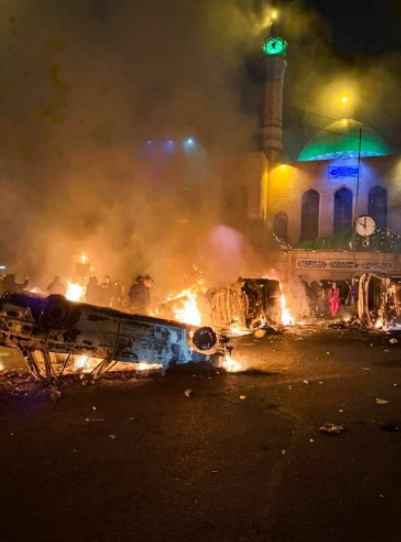
‘Massacre’ feared in Iran as security forces seek to crush protests © Social media/Reuters
Reports of a dramatic escalation in the use of deadly force by Iranian security forces have begun to trickle out of the country despite a severe communications blackout as authorities struggle to contain mass protests.
The Center for Human Rights in Iran, based in New York, said it received eyewitness accounts and credible reports indicating that hundreds of protesters have been killed in Iran since the government cut off the country’s access to the internet on Thursday night.
The CHRI said witnesses have reported that “hospitals were overwhelmed, blood supplies are critically low, bodies are being piled up, and the number of casualties is rising by the hour.” It said that many protesters have been shot in the eyes. In the past, Iranian security forces have shot protesters in the eyes with metal pellets and rubber bullets. The group also said witnesses reported the use of snipers, military rifles and surveillance drones.
“CHRI warns that a massacre is unfolding,” the organization said. “The world must act now to prevent further loss of life.
The organization, active since 2008, cautioned that verifying the exact number of those killed in the demonstrations is “currently impossible” because of the blackout. The Washington Post does not have a reporter in Iran and could not verify the CHRI’s account, but the organization has been conservative in the past in estimating the number of people killed by security forces during other protests in Iran. It works with a network of activists inside Iran to document human rights abuses, according to its website. By Friday, other human rights groups said that security forces had already killed dozens.
BBC Persian also reported, citing “informed sources” at hospitals in Tehran and Rasht, a city in the country’s north, that 110 bodies had been transferred to the two facilities. Doctors inside Iran told the same news outlet that people had been brought to hospitals with bullet wounds in the head, neck and eyes.
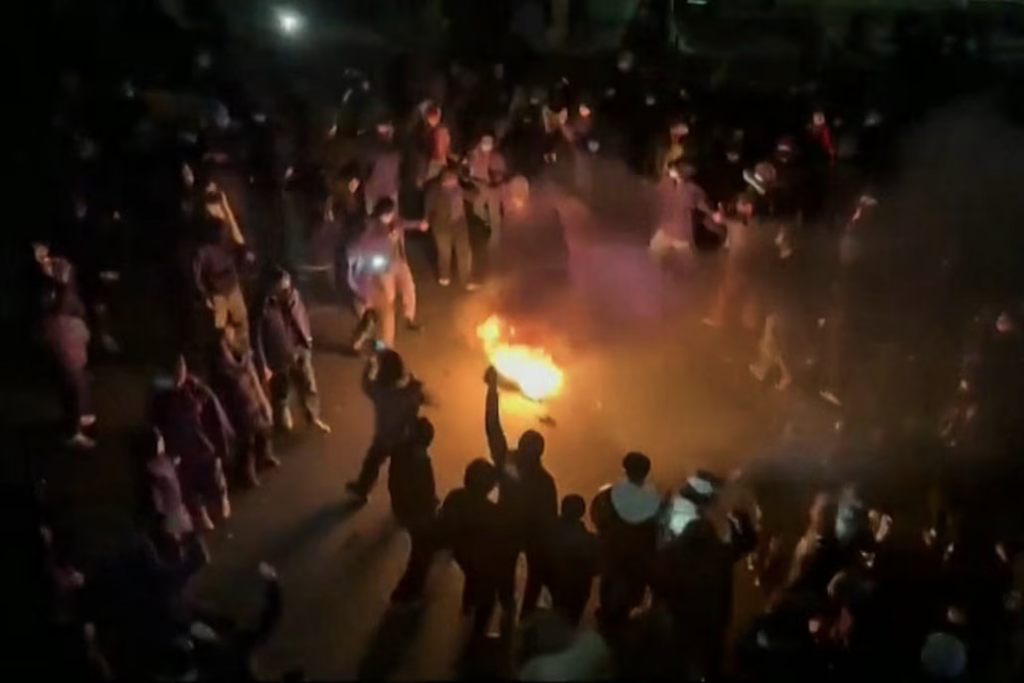
A still taken from a video shows crowds gathered in protest at Pounak Square in Tehran on Jan. 9. (AFP/Getty Images)
Iranian police chief Ahmad-Reza Radan was quoted by Iran’s state broadcaster on Sunday as saying that security forces had “stepped up” their confrontation with “rioters” and that “main elements” behind the unrest had been rounded up and would be punished following a legal process.
Radan also acknowledged deaths but implied that they were at the hands of coordinated agitators rather than security forces. His evidence for that assertion was that, according to him, many of those killed had stab wounds or had been killed by gunshots at close range.
Videos shared by BBC Persian and other Persian-language news outlets outside the country showed three straight days of mass protests in several large Iranian cities starting Thursday, including the capital, Tehran, and Mashhad in the northeast. The large gatherings are the latest turn in a series of protests and strikes that have lasted two weeks as Iranians call for an end to the country’s theocratic system.
Little information has been available on the events in Iran since the internet blackout began on Thursday evening. Some Iranians have been able to briefly connect using Starlink devices that have been smuggled into the country over the past few years, and videos have circulated on citizen journalist accounts and social media in the past several days that appear to indicate a high death toll, including what appear to be family members trying to identify the bodies of their loved ones at morgues.
The Washington Post could not immediately verify those videos.
The Trump administration is considering military options in response to the unrest, U.S. officials said Saturday. President Donald Trump has not settled on a preferred option, and discussions are expected to continue in the coming days, three U.S. officials said, speaking on condition of anonymity because of the sensitivity of the issue.
The current protests began on Dec. 28, sparked by merchants devastated by the precipitous fall of the Iranian currency over the past few months. The demonstrations quickly spread across the country and were joined by students, workers and other elements of Iranian society.
MSN/ The Washington Post
