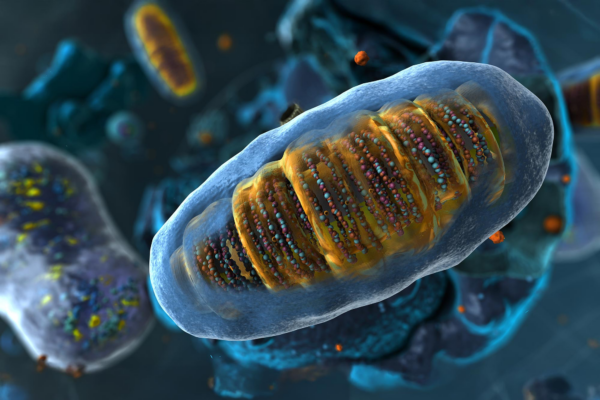
Ribosomes can act as stress detectors when they stall and collide, signaling that something is wrong inside the cell. Researchers have shown how ZAK recognizes these collisions and triggers protective pathways. Credit: Shutterstock
Researchers at LMU have uncovered how ribosomes, the cell’s protein builders, also act as early warning sensors when something goes wrong inside a cell.
When protein production is disrupted, and ribosomes begin to collide, a molecule called ZAK detects the pileup and switches on protective stress responses.
Ribosomes as Protein Builders and Stress Sensors
Ribosomes, often described as the protein factories of the cell, are essential to every form of life. They attach to mRNA and travel along it, interpreting the genetic code and linking amino acidsinto proteins. Their role, however, is not limited to protein assembly. Ribosomes also help detect cellular stress and can trigger protective responses when the cell is in trouble.
An international research team led by Professor Roland Beckmann at LMU’s Gene Center Munich has now uncovered major details of how this stress response is activated. The findings appear in the journal Nature.
How Cellular Stress Disrupts Protein Production
Protein synthesis is highly sensitive to a range of stressors, including shortages of amino acids, damage to mRNA, and viral infections. These disruptions interfere with normal mRNA reading and can cause ribosomes to stall and run into one another.
When this occurs, a process known as the ribotoxic stress response (RSR) begins. The RSR triggers protective pathways that either repair the underlying problem or, if the damage is too severe, initiate programmed cell death.
Investigating ZAK With Biochemistry and Cryo-Electron Microscopy
The protein ZAK – a so-called kinase, that is, an enzyme which activates other molecules by transferring a phosphate group to them – is central to controlling this stress response. Until recently, scientists did not know how ZAK detects collided ribosomes or how this recognition event triggers downstream signaling.
By combining biochemical approaches with cryo-electron microscopy, the research team demonstrated that ribosome collisions serve as the main activation signal for ZAK. They also identified how ZAK attaches to ribosomes and which structural features of collided ribosomes must be recognized for activation to occur.
The researchers found that interactions between ZAK and specific ribosomal proteins cause parts of ZAK to dimerize, meaning that two copies of the molecule form a bonded pair. This pairing initiates the signaling cascade.
Why Understanding ZAK’s Role Matters
“A deeper understanding of these mechanisms is important for several reasons,” says Beckmann: First of all, ZAK acts very early in the cellular stress response, and so clarifying its recognition mechanisms furnishes important insights into how cells perceive disturbances with high temporal precision and how ribosomal quality control, downstream signaling pathways, and the immune response interact with each other. Furthermore, ZAK is therapeutically relevant, as dysregulated ZAK activity is associated with inflammatory diseases and chronic ribosomal stress.
“Our findings thus illuminate a central principle of eukaryotic stress biology,” says Beckmann. “The translation machinery itself serves here as a surveillance platform from which global stress signals are initiated.”
Reference: “ZAK activation at the collided ribosome” by Vienna L. Huso, Shuangshuang Niu, Marco A. Catipovic, James A. Saba, Timo Denk, Eugene Park, Jingdong Cheng, Otto Berninghausen, Thomas Becker, Rachel Green and Roland Beckmann, 19 November 2025, Nature.
DOI: 10.1038/s41586-025-09772-8
