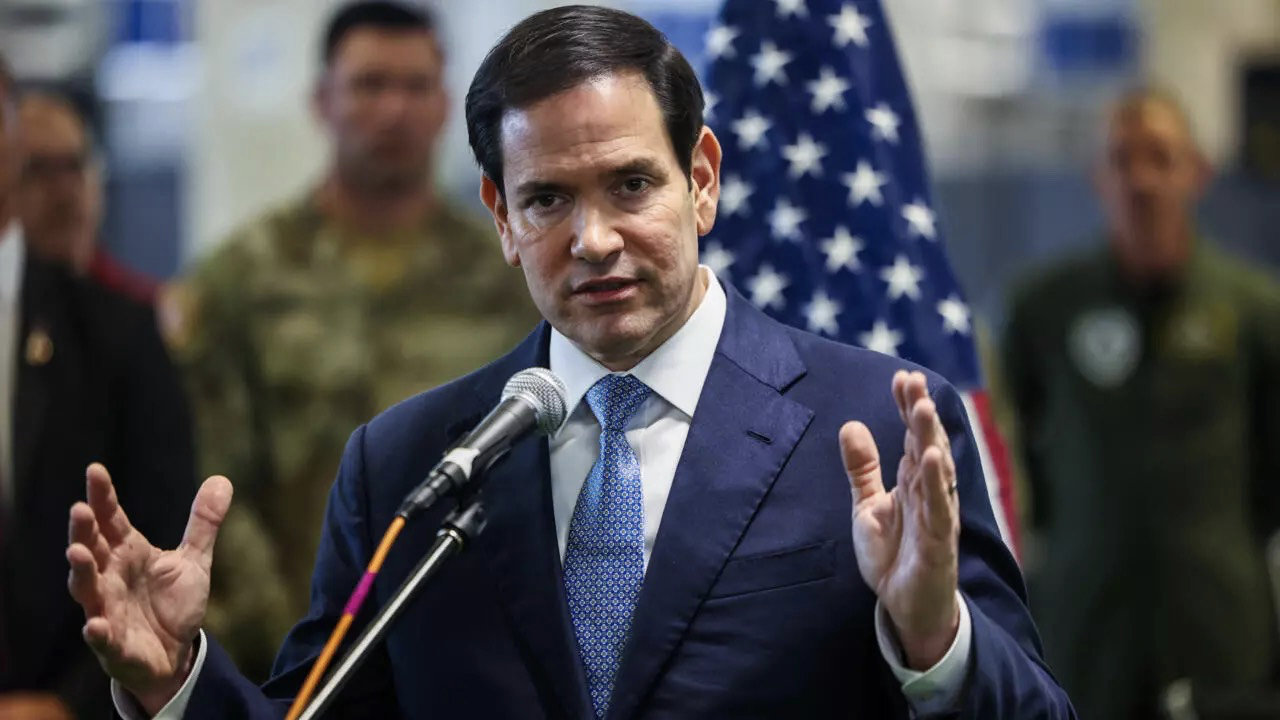
US Secretary of State Marco Rubio speaks to the media after visiting the Civil-Military Coordination Center in southern Israel, on October 24, 2025. © Fadel Senna, AP
US Secretary of State Marco Rubio on Friday said it was critical for the ceasefire deal in Gaza that an international stabilisation force be deployed “as soon as it possibly can”, with Israel potentially able to veto participants. Rubio is the latest high-profile member of US President Donald Trump’s cabinet to visit Israel in a bid to shore up the fragile ceasefire in the Palestinian enclave.
Gaza- US Secretary of State Marco Rubio voiced hope Friday of soon putting together an international force to police the ceasefire in Gaza and said Israel could veto participants.
Rubio visited Israel on the heels of Vice President JD Vance as part of an all-out effort by the United States to protect the truce – including by preventing major new action by Israel.
Rubio expressed optimism for a durable end to the two-year war in Gaza as he met Israeli, US and other Western forces monitoring the ceasefire from inside a vast converted warehouse in southern Israel.
The deal spearheaded by US President Donald Trump calls for an international force to enter Gaza and oversee security after Israel’s ceasefire with Hamas, whose unprecedented attack on October 7, 2023 sparked a war that has left most of Gaza in rubble.
Rubio said it was critical for the deal to create “the conditions for the stabilisation force to come in as soon as it possibly can be put together”.
He confirmed that Israel would enjoy vetoes on the force composition, amid reports that Israel has objected to participation by Turkey.
“There’s a lot of countries that have offered to do it. Obviously as you put together this force, it will have to be people that Israel is comfortable with,” he said.
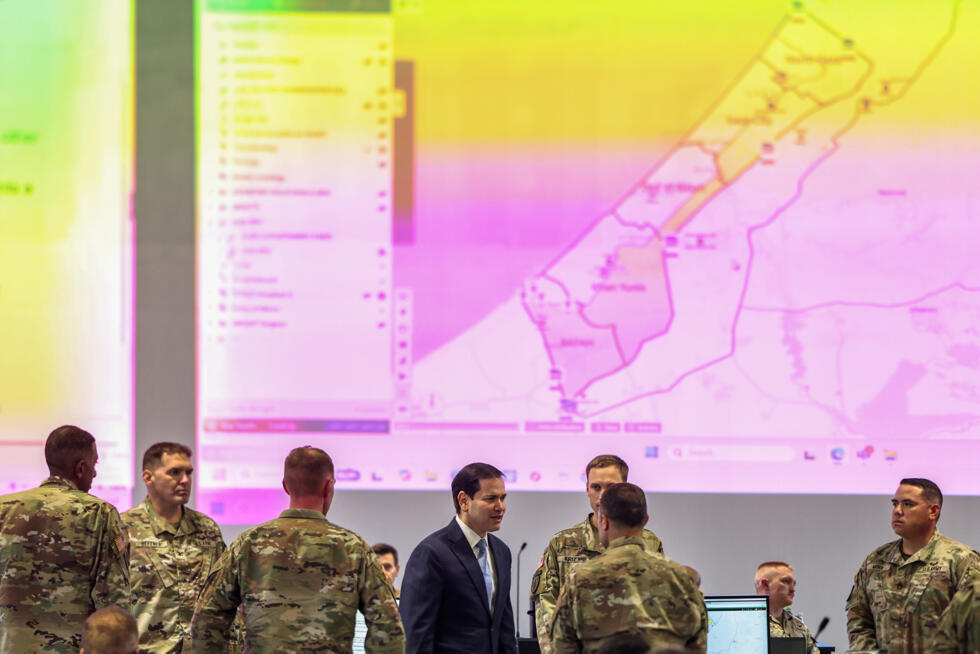
US Secretary of State Marco Rubio speaks with US military personnel as he visits the Civil-Military Coordination Center in southern Israel © Fadel SENNA / POOL/AFP
Turkey, a NATO member and one of the region’s strongest militaries, was the first Muslim-majority country to recognise Israel.
But, under President Recep Tayyip Erdogan, Turkey has welcomed Hamas leaders and been a critic of Israel, which Erdogan accuses of committing genocide in Gaza, an allegation Israel denies.
Indonesia, the world’s largest Muslim-majority state, has said it is ready to send troops to Gaza.
The United Arab Emirates, which normalised ties with Israel in 2020, has already been involved in ceasefire monitoring.
Rubio said the United States may seek a UN mandate for the force as some countries need the world body’s imprimatur to deploy troops.
The Trump administration has pulled back from much of the United Nations, and Rubio again rejected any future role for UNRWA, the UN agency for Palestinian refugees, which Israel has long sought to sideline.
‘More progress’ than expected
Some 200 US soldiers have deployed to the ceasefire coordination centre, where uniformed troops from a dozen countries were seen mingling in the hastily-assembled rented space whose latest addition was artificial grass carpeting.
Overhead screens showed the staff’s latest findings, including what it said was a new abundance of fruit, vegetables, cheese and coffee getting into Gaza.
Another projection showed the day’s schedule and ended with words from Trump that read like a motivational saying: “A new and beautiful day is rising. And now, the rebuilding begins.”
Rubio said of the truce: “We’ve made more progress in 13 days than anyone thought possible.”
The Trump administration has increasingly leaned on Israeli Prime Minister Benjamin Netanyahu, who in March brushed aside an earlier ceasefire and ordered a major new offensive.
Trump, responding to concerns by Arab states, has urged Israel not to annex the occupied West Bank. The Israeli parliament voted to advance laws calling for annexation during the visit by Vance, who described the move as a personal affront.
“Suffice it to say we don’t think it’s going to happen,” Rubio said of annexation.
Still waiting for aid
Netanyahu, meeting Rubio late Thursday, was quick to avoid any perception of tensions with the United States and said the back-to-back visits by top US officials were part of a “circle of trust and partnership”.
Israel is still waiting for Hamas to return the remains of 13 of 28 dead hostages it promised to hand over.
Hamas said Friday in a statement it had received “clear guarantees” from mediators Egypt, Qatar and Turkey that “the war has effectively ended”.
It called for greater pressure on Israel to allow in humanitarian aid.
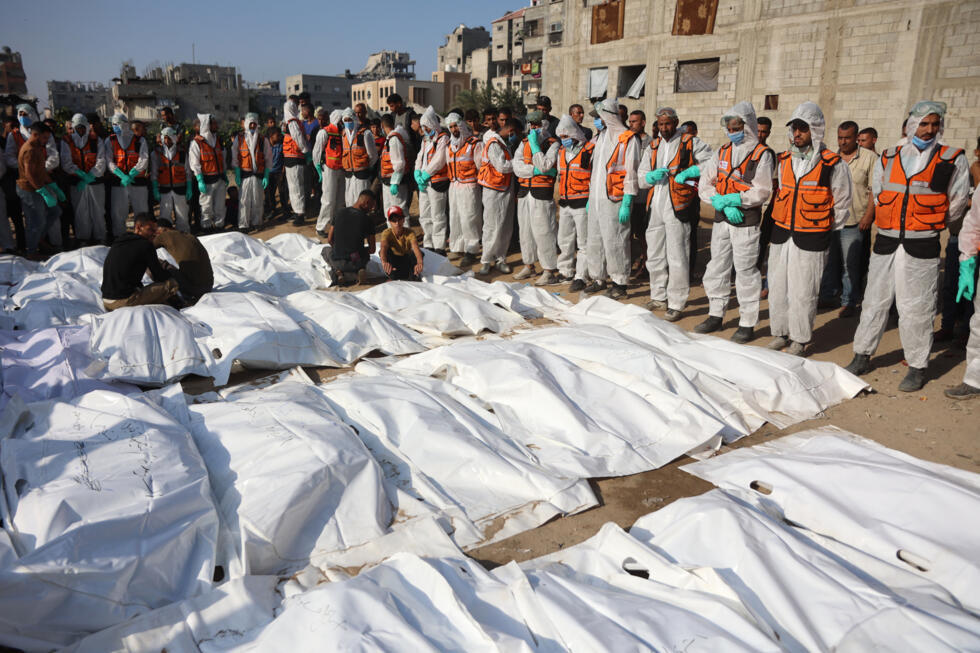
The World Health Organization (WHO) said Thursday there had been little improvement in the amount of aid going into Gaza – and no observable reduction in hunger.
“The situation still remains catastrophic because what’s entering is not enough,” WHO chief Tedros Adhanom Ghebreyesus said.
(FRANCE 24 with AFP)
