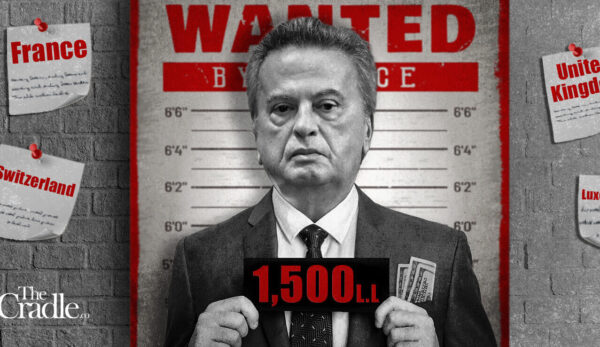
Riad Salameh who was once internationally hailed as the guardian of Lebanon’s financial stability, has fallen from grace long time ago . He spent his final weeks in office a wanted man, faced with French and German arrest warrants that have been prompted by long-running corruption probes.
By Ya Libnan , Op-Ed
Lebanon’s ex-central bank chief Riad Salameh—once hailed as the architect of the country’s financial system but now reviled as the man behind its collapse—has been released on a bail package of $20 million and 5 billion Lebanese pounds (about $55,000). The ruling by Beirut’s Indictment Chamber also imposed a one-year travel ban.
This decision is nothing short of outrageous. Mr. Salameh faces multiple judicial investigations at home and abroad for embezzlement, illicit enrichment, forgery, and financial misconduct. In September, a Lebanese judge charged him with embezzling at least $44 million in the Optimum scandal, which exposed the deep rot inside Lebanon’s central bank. Once detained, his request for bail was rejected—but now, suddenly, he walks free.
The Mastermind of Lebanon’s Ponzi Scheme
Salameh is not just another corrupt official. He is the chief architect of Lebanon’s Ponzi scheme—the mechanism that looted depositors’ savings, bankrupted families, and obliterated the Lebanese pound, which has lost nearly 99% of its value. The World Bank has labeled Lebanon’s financial collapse as one of the worst crises since the mid-1800s. Millions of Lebanese citizens, who lost their life savings, are living in poverty because of his policies and his complicity with the political elite.
Why Now? The Fear Factor
The timing of his release raises a disturbing question: why now? The answer may lie in the fear that many Lebanese politicians have of Salameh. He knows too much. His long tenure at the helm of the Banque du Liban means he holds the keys to secrets that could implicate the political class itself. Rather than facing justice, Salameh is being shielded by those who fear exposure.
Bail or Insult?
To call $20 million “bail” for a man accused of embezzling tens of millions—and who presided over the destruction of an entire financial system—is an insult. For Salameh, $20 million is pocket change, not punishment. It is a mockery of the ordinary Lebanese depositor who lost everything.
Justice Must Prevail
If Lebanon’s judiciary cannot guarantee a fair and transparent trial, then Salameh must be extradited to France or other European jurisdictions, where cases against him are ongoing. To release him in Beirut under a slap-on-the-wrist bail undermines the very notion of justice.
Lebanon’s survival depends on accountability. If the man who bankrupted the people can walk free, what hope is left? If extradition is blocked, then he should be sent back to jail and serve nothing less than a life sentence. Anything less would be a betrayal of Lebanon’s people.
