Only decentralization without sectarianism can protect Syria’s minorities and prevent another failed state.
By : Ya Libnan Editorial Board
U.S. envoy to Syria Thomas Barrack recently suggested that the country should consider alternatives to a strongly centralized state. He said that Syria does not need federalism, but something “less”—an arrangement that ensures every community can preserve its culture and language “without any threat from political Islam.”
This is a valuable point. But Syria must also avoid the dangerous trap that Lebanon and Iraq fell into: sectarian power-sharing systems that divide people by religion or ethnicity rather than uniting them as citizens. In such systems, loyalty is not to the nation but to the sect, weakening the state, feeding corruption, and paving the way for foreign interference.
Lessons From Iraq and Lebanon
Both Iraq and Lebanon institutionalized sectarian quotas. In Lebanon, power is divided among Christians, Sunnis, Shiites and Druze . In Iraq, the arrangement is built around Shiites, Sunnis, and Kurds.
The result in both countries has been the same: endless gridlock, weak central governments, and militias stronger than the state. Sectarian systems produce fragile states where every political crisis risks tearing the country apart.
Syria cannot afford to copy this model. Its future stability depends on creating a system that promotes loyalty to the Syrian state while giving minorities genuine security.
The Alternative: Local Self-Governance Without Sectarian Quotas
The answer lies in decentralization without sectarianism. This means:
- Strong central state institutions for defense, foreign policy, and national economic planning, so all Syrians share a common destiny.
- Local self-rule for minorities in cultural, educational, and municipal affairs, free from interference by the Sunni majority or by Islamist factions.
- Constitutional guarantees that protect minority languages, traditions, and political participation, while banning sectarian quotas that would divide Syrians along religious or ethnic lines.
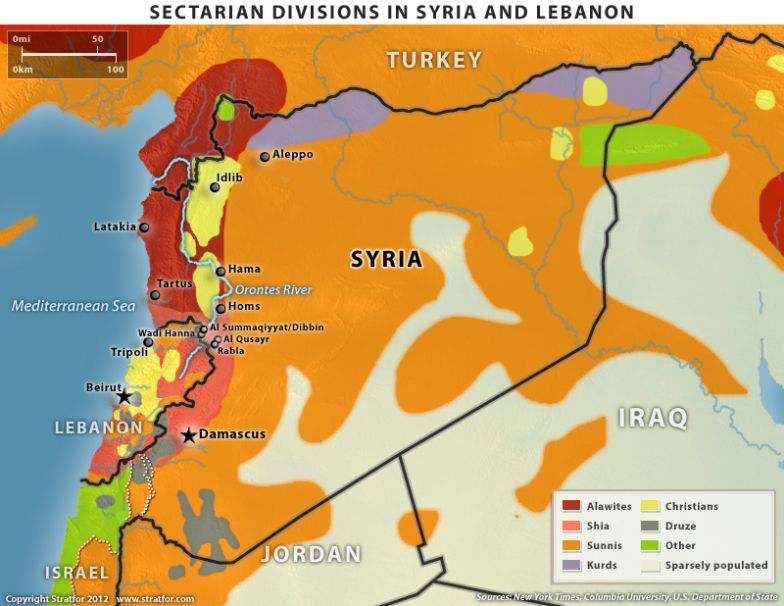
Under such a model, the Kurds in the north, the Alawites in the west, the Christians in central Syria, and the Druze in the south can all safeguard their identities without threatening Syria’s unity.
A Regional Lesson: Lebanon and Iraq Must Change Too
This is not just about Syria. Lebanon and Iraq themselves need to rethink their sectarian systems. Their current arrangements have turned politics into a zero-sum battle among sects, eroded national loyalty, and left both countries vulnerable to foreign powers.
What Lebanon and Iraq need—just like Syria—is a new model that:
- Preserves minority rights without dividing the nation.
- Builds strong, impartial state institutions.
- Promotes loyalty to the state above all sectarian affiliations.
Only then can they emerge from the cycle of corruption, paralysis, and foreign domination.
A Call for Rational Solutions
As Barrack noted, Syria needs to proceed “in a more rational manner.” Rationality means rejecting two extremes:
- On one side, a suffocating central state that forces minorities to assimilate.
- On the other, sectarian federalism that entrenches divisions and risks partition.
The middle ground is clear: a strong, unified Syrian state that commands the loyalty of all citizens, coupled with local autonomy that guarantees minorities will never again be at the mercy of majoritarian rule.
Conclusion
The road ahead for Syria is not easy. But if Syrians are to heal the wounds of war and rebuild their country, they must rise above sectarian formulas that have failed elsewhere. And if Lebanon and Iraq are to escape their own cycles of weakness and division, they too must move beyond sectarianism and promote loyalty to the state.
The best alternative for Syria—and for the region—is a modern decentralized system with strong constitutional protections, one that allows minorities to govern themselves locally in cultural and social affairs while maintaining a powerful central state that represents all citizens equally. This model has been tested in several countries and has proven capable of protecting diversity without undermining unity.
The Middle East cannot afford more failed states. It needs inclusive systems that guarantee the rights of minorities, strengthen state institutions, and promote loyalty to the nation above all else. Anything less will only repeat the tragic mistakes of the past.
