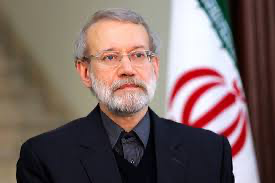
file photo: Ali Larijani , the head of Iran’s top security body will visit Iraq on Monday before heading to Lebanon, where the government has approved a plan to disarm Tehran’s ally Hezbollah. Iran is the only country in the world that condemned Lebanon’s decision to disarm its proxy Hezbollah. Reports from Lebanon indicate that PM Nawaf Salam is being urged to cancel his trip and may do just that and the next step is expected to be the cutting off of diplomatic ties with Iran. Iran’s so-called “friendship” has brought Lebanon nothing but war, division, and misery , according to Lebanese political observers
By: Ali Hussein, Lebanese Political Observer
Lebanon has decided to disarm Hezbollah for one reason only: to restore its sovereignty and reclaim the state’s exclusive right to decide matters of peace and war. For too long, this decision has been held hostage by a militia that answers not to Beirut, but to Tehran.
Hezbollah claims to be Lebanon’s shield against Israel, but its record tells a different story — one of reckless wars, strategic blunders, and national humiliation. In 2006, Hezbollah’s war with Israel ended not in victory, but in devastation: hundreds of civilians dead, entire neighborhoods reduced to rubble, and billions of dollars in economic losses. And what was the result? Lebanon lost the northern part of the village of Ghajar to Israeli occupation — a loss that stands to this day.
In its most recent confrontation, Hezbollah again failed to protect Lebanon. The war achieved nothing for the Lebanese people but gave Israel a pretext to occupy five additional strategic hills in southern Lebanon. These positions now serve as military outposts threatening our borders and undermining our national security. Instead of defending the country, Hezbollah’s actions have cost us land, weakened our military position, and deepened our vulnerability.
Now, after the government’s decision to disarm Hezbollah, the Iran-backed party appears to be turning its sights inward — resisting Lebanon itself rather than Israel. The Lebanese have not forgotten May 2008, when Hezbollah’s fighters pointed their guns not at the enemy across the border, but at their fellow citizens in Beirut, seizing control of neighborhoods and terrorizing the capital. That day exposed the truth: Hezbollah’s weapons are just as much a threat to the Lebanese people as to any foreign adversary.
This is not the first time Hezbollah has dragged Lebanon into conflicts it did not choose. In 2013, it openly joined the Syrian civil war to fight alongside Bashar al-Assad’s brutal regime — a move that brought waves of Syrian refugees into Lebanon, straining our economy and infrastructure to breaking point. Time and again, Hezbollah’s loyalty to Iran and Assad has taken precedence over Lebanon’s national interest, sacrificing our stability for their regional agenda.
And then came August 4, 2020 — the Beirut Port explosion. Thousands of tons of ammonium nitrate, brought in and stored by Hezbollah for the Syrian regime’s use in barrel bombs against its own civilians, ignited in one of the largest non-nuclear blasts in history. According to an FBI report, only about 500 of the 2,750 tons actually exploded. Had the full amount detonated, Beirut and all its surrounding regions could have been wiped off the map. The devastation killed more than 220 people, injured seven thousands, left over 300, 000 homeless and destroyed much of the capital — all because Hezbollah turned Lebanon’s main port into a warehouse for death.
And yet, of all the countries in the world, only one opposes Hezbollah’s disarmament: Iran. The same Iran that has meddled in our politics, hijacked our foreign policy, and treated Lebanon as a pawn in its power games. This interference has been firmly rejected and denounced by the overwhelming majority of the Lebanese people.
Enough is enough. Iran’s so-called “friendship” has brought Lebanon nothing but war, division, and misery. If we truly want to save our country, we must sever these toxic ties now — before Lebanon loses not just its sovereignty, but its very future.
