
“We Would Rather Die”: Hezbollah’s Defiance Is Lebanon’s Death Sentence
By: Ali Hussein , a Lebanese political analyst
Hezbollah’s parliamentary bloc leader, MP Mohammad Raad, has made a shocking declaration in response to the Lebanese cabinet’s decision to assign the Lebanese Army and its security forces as the sole legitimate bearers of arms: “We would rather die than hand over our arms.”
Coming from the supposed head of Hezbollah’s political wing, such words are nothing short of reckless. This is not the language of a statesman—it is the rhetoric of defiance against the very idea of a unified, sovereign Lebanon.
Let us be clear: the weapons Raad is defending have brought Lebanon nothing but tragedy. In 2006, Hezbollah’s miscalculations plunged the country into a devastating war with Israel, leading to the destruction of entire neighborhoods, the loss of innocent lives, and the occupation of the northern part of Ghajar.
In 2023, Hezbollah repeated its recklessness by launching a war against Israel—reportedly to defend its Iran-backed ally Hamas. That war did not help Hamas in any meaningful way. Instead, it led to the occupation by Israel of five strategic hills in southern Lebanon, weakening Lebanon’s defensive position and increasing the threat to its southern villages.
Hezbollah’s destructive choices have not been limited to confrontations with Israel. Its full military and logistical backing for Bashar al-Assad in Syria contributed to one of the worst humanitarian crises of our time, pushing millions of Syrian refugees into Lebanon. This influx has placed unbearable pressure on Lebanon’s infrastructure, economy, and social fabric.

The devastation reached its most horrifying form on August 4, 2020, with the Beirut blast. Thousands of tons of ammonium nitrate—illegally stored at the port for years—detonated, killing more than 220 people, injuring thousands, and destroying large swathes of the capital. Investigations have revealed that these explosives were reportedly kept for the Syrian regime to be used in barrel bombs against civilians—a shocking example of how Hezbollah’s actions directly endangered Lebanese lives.
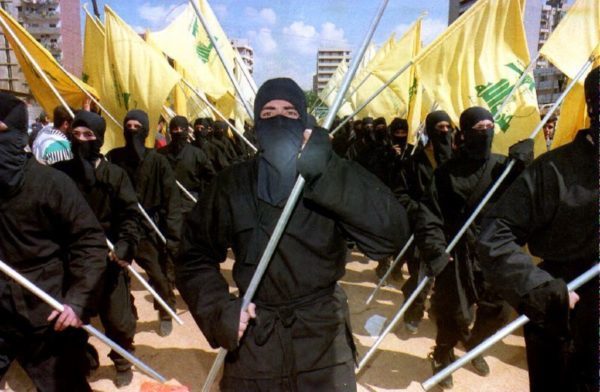
And let us not forget May 2008, when Hezbollah turned its guns inward, occupying West Beirut and attacking fellow Lebanese citizens. That moment proved beyond doubt that its arms are not solely for “resistance” against Israel—they are also a tool for internal intimidation and domination.

A Lebanese Army soldier is shown saluting the flag . The Army’s loyalty is only to Lebanon and its defense
Wise voices in Lebanon—Shiite, Sunni, Christian, Druze alike—must rise above this dangerous bravado. The future of Lebanon cannot be held hostage to weapons that serve no national interest, inflame regional tensions, and perpetuate cycles of destruction.
It is time to choose: loyalty to Lebanon, or loyalty to arms that have only deepened its wounds. The country’s survival depends on ending the culture of militias and affirming the exclusive authority of the Lebanese Army to defend its people and its borders. Anything less is a slow suicide.
