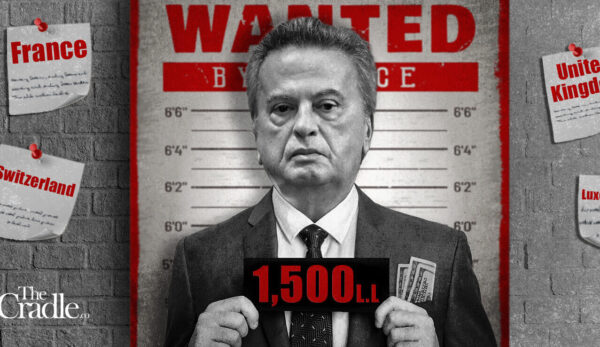
Riad Salameh who was once internationally seen as the guardian of Lebanon’s financial stability, has fallen from grace long time ago . He spent his final weeks in office a wanted man, faced with French and German arrest warrants that have been prompted by long-running corruption probes.
By: YaLibnan
Once again, Lebanon’s parliament has proven it is more interested in protecting itself than protecting the Lebanese people. The recent legislation—presented as a step toward financial reform—does nothing to address the core of Lebanon’s economic collapse. It reflects a complete lack of political will to uncover the truth, deliver accountability, or rescue the nation’s economy from further ruin.
At the heart of the financial catastrophe lies one of the most egregious Ponzi schemes in modern history, masterminded by the long-serving Central Bank Governor, Riad Salameh. For decades, Salameh artificially propped up Lebanon’s banking system through unsustainable financial engineering that required constant inflows of new deposits to pay off old obligations—classic Ponzi scheme mechanics. When the inflows stopped, the entire system collapsed. The Lebanese people—especially the small and middle-class depositors—were left holding the bag.
Instead of being held accountable, Salameh was protected. For years, Lebanon’s ruling elite shielded him, allowing him to operate above the law. He was indispensable to their survival: his schemes funded the corrupt political machine, allowed unsustainable state borrowing, and enriched banks tied to the ruling parties. When European countries—particularly France, Germany, and Luxembourg—launched criminal investigations and issued international arrest warrants, the Lebanese judiciary did nothing. Not only did Lebanon refuse to extradite him, but its institutions closed ranks around him.
It wasn’t until international pressure became too loud to ignore that the political establishment staged a new maneuver: Salameh was quietly arrested in Beirut in September 2024 and placed in pretrial detention. At first glance, this looked like justice at last. But in truth, it was another calculated move by the ruling class—not to prosecute him, but to protect him from facing justice abroad. Lebanon does not extradite its citizens, and by detaining Salameh locally, the authorities ensured he would never face European courts or reveal the full extent of the financial crimes that implicate them all.
This isn’t justice. It’s obstruction.
Where did the depositors’ money go? It went to fund decades of deficits, bloated public institutions, phantom infrastructure projects, and private enrichment. It vanished into luxury real estate in Europe, offshore accounts, and shady deals approved and facilitated by political and banking elites. The man who knows where every dollar went—Riad Salameh—sits in a Lebanese jail, protected by the very people who should be standing trial with him.
Parliament’s latest legislation does nothing to recover the stolen funds, hold the guilty accountable, or implement real financial reform. It is yet another smokescreen—an attempt to buy time, deflect blame, and preserve a dying system that benefits the few at the expense of the many.
Lebanon will not be saved by cosmetic reforms or symbolic arrests. It needs truth. It needs accountability. And above all, it needs an end to the culture of impunity that has allowed an entire country to be looted in broad daylight.
The Lebanese people deserve to know: Who stole their money? Where is it? And why are the thieves still in power?
Until those questions are answered, recovery is impossible. Justice delayed is justice denied.
