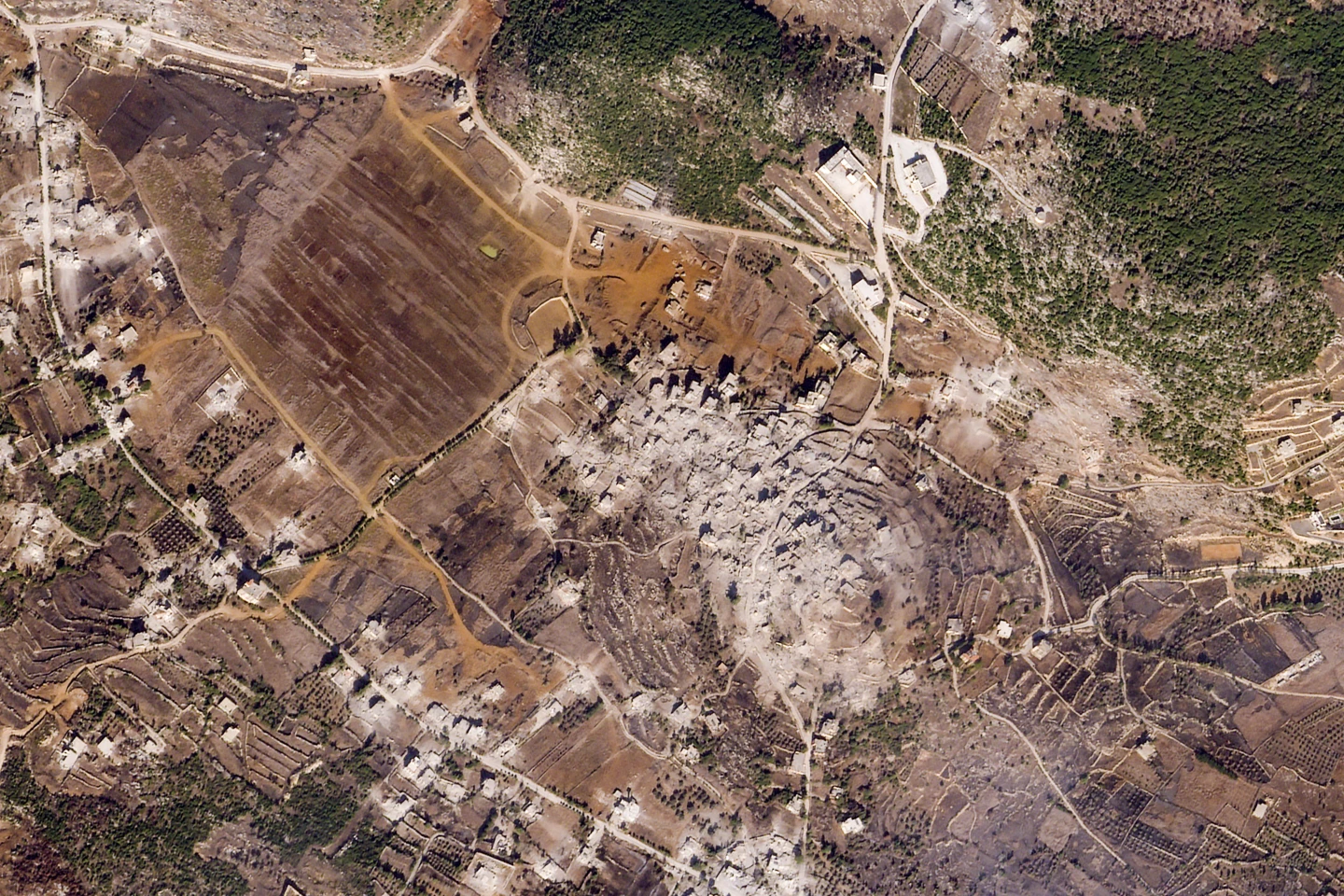
Perched on a hilltop a short walk from the Israeli border, the tiny southern Lebanese village of Ramyah has almost been wiped off the map. In a neighboring village, satellite photos show a similar scene: a hill once covered with houses, now reduced to a gray smear of rubble.
Beirut- The World Bank issued a new estimate Friday for Lebanon’s reconstruction and recovery needs following 14 months of Israel-Hezbollah destructive war, putting it at $11 billion.
A report released by the international financial institution assessing the impact of the 2023-2024 war on Lebanon’s economy and 10 key sectors indicated that the conflict resulted in damage to physical structures amounting to $6.8 billion and caused $7.2 billion in economic losses from “reduced productivity, foregone revenues and operating costs.”
“Recovery and reconstruction need a total of $11 billion,” the report said.
Housing has been the hardest hit sector, with damages estimated at $4.6 billion. The commerce, industry and tourism sectors also were highly impacted, with losses estimated at $3.4 billion across the country.
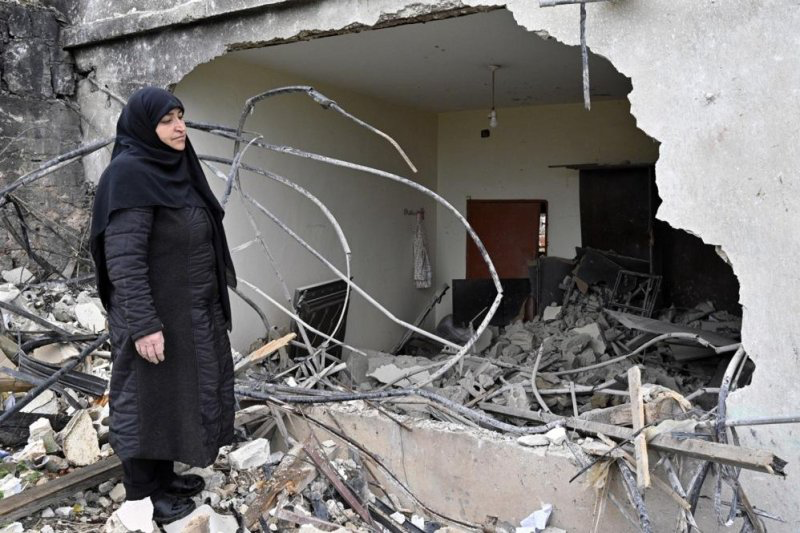
Zainab Nasrallah, 53, inspects her house, destroyed by Israeli forces, in the southern Lebanese village of Houla on Friday. Nasrallah remained in her village for nine months during the fighting between Hezbollah and Israeli forces before moving to a nearby village and then fleeing to Beirut. Now, she has returned to her village, seeking ways to rebuild her destroyed house and live there again. Photo by Wael HamzehEPA-EFE
These areas were the most hit by Israel’s air and ground bombardment that wiped out dozens of villages, especially along the border.
Civilian infrastructure, including roads, homes, schools and health facilities, were extensively damaged, exacerbating the challenges faced by displaced populations in their efforts to return, according to the report.
It said that many villages near the southern border remain uninhabited due to “ongoing insecurity and access limitations,” noting that more than 95% of the displaced who have initiated their return to their areas of origin are currently residing in rental housing or host settings.
The Israel-Hezbollah war, which started in October 2023 in support of Gaza, ended Nov. 27 with a cease-fire agreement brokered by the United States and France.
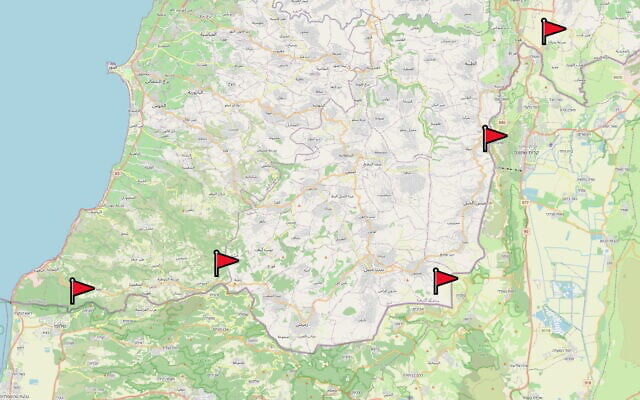
However, Israel maintained five military hilltop posts inside south Lebanon when it pulled out its forces Feb. 18 and kept on striking suspected Hezbollah targets.
The World Bank estimated that $8.4 billion is needed to cover Lebanon’s first three recovery years, starting in 2025; and $2.6 billion in the medium term (2028-2030).
The highest estimated needs are in housing at $6.3 billion, or 57% of the total, and in commerce, industry and tourism, with $1.8 billion, or 17% of the total, followed by the infrastructure sectors with a combined $1 billion of needs, 9% of the total.
UPI
